112 — general emergency number
For an urgent incident that needs emergency services, including when you are unsure which service to call. The operator will pass the details to the appropriate service.
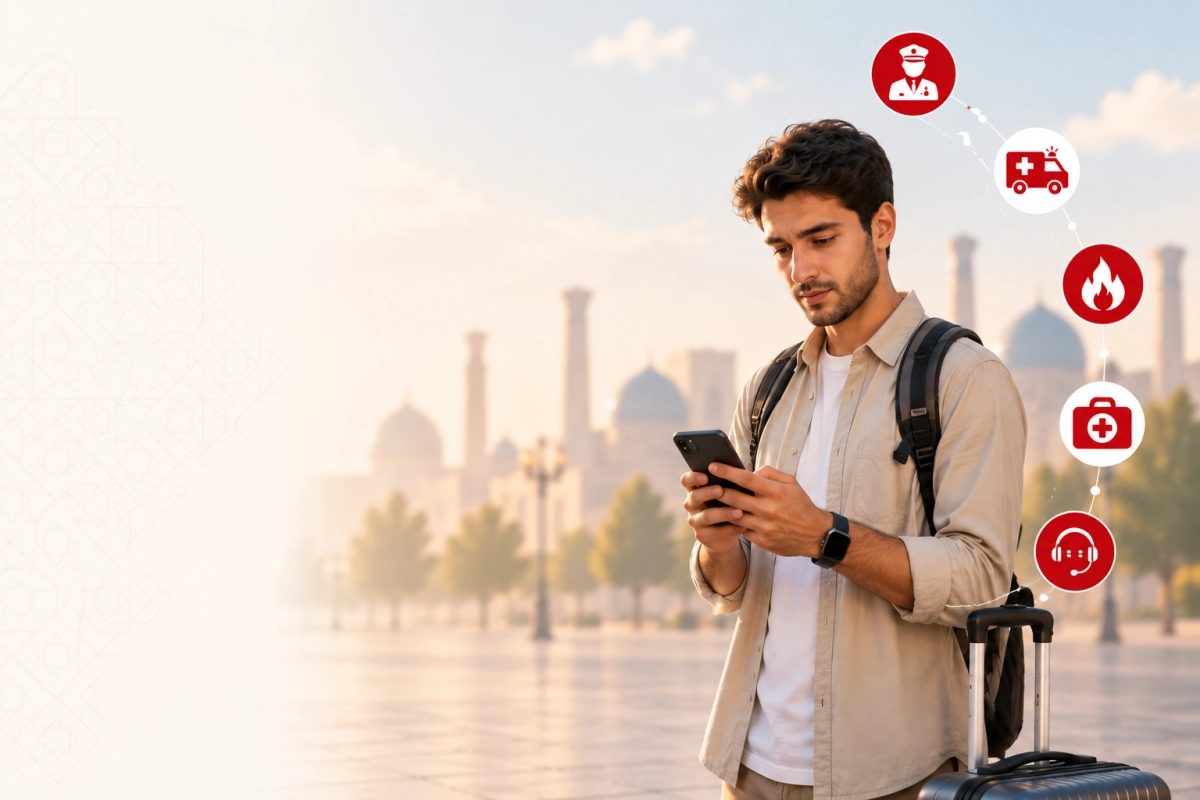
In immediate danger, call 112. To reach a service directly: police — 102, ambulance — 103, fire service — 101, gas emergency service — 104.
Call the service you need first, then inform your hotel, guide and insurer. The Safe Tourism hotline, 1173, supports visitors; for an urgent threat, start with 112 or the relevant emergency service.
For an urgent incident that needs emergency services, including when you are unsure which service to call. The operator will pass the details to the appropriate service.
To report a crime, assault, threat or another incident requiring the police. Tell the operator straight away if the danger is ongoing.
When someone needs urgent medical help. Describe their condition, give the location and the number of people affected, and follow the operator’s instructions.
For fire, smoke or something burning. Move to a safe place first if you can do so without putting yourself at risk, and call the service.
To contact the Ministry of Emergency Situations’ rescue service. If you are unsure what help an incident requires, call 112 and explain the situation.
If you smell gas or suspect a leak. Call from a safe place. Do not use flames or electrical switches near a suspected leak.
For gas supply enquiries to Hududgazta’minot. If you smell gas, do not delay an emergency call to 104 or 112.
The Safe Tourism Department’s hotline for visitors. Contact it for tourist assistance; if someone’s life is at risk, someone is injured or there is a fire, call an emergency service.
Give the city, street, building number and a nearby landmark. At a hotel, give its name, address and your room number. On a road, describe any landmarks and your direction of travel.
Briefly describe the incident: fire, injury, assault, road accident or a smell of gas. Say whether the danger is still present and how many people have been injured.
Give your phone number. Say you are a visitor and ask for a language you understand. Answer the operator’s questions and follow their instructions.
“I’m a visitor. We need an ambulance. We are in Tashkent, at __ hotel, __ street, room __. One person is injured. My number is __.” Replace the details with those of your situation.
Leave the affected room or building if you can do so safely. Follow the building’s evacuation plan and the operator’s instructions. Do not use an ordinary lift or go back for luggage. Call 101 or 112.
Do not light a flame or switch lights or electrical appliances on or off. Leave the building and call 104 or 112 from outside. Do not go back in until specialists say it is safe.
Move away from moving traffic if it is safe to do so. If anyone is injured, call 103 or 112; for the police, call 102. Give the location, the number of vehicles and how many people are injured.
For a medical emergency, call 103 or 112. Say whether the person is conscious and breathing, what happened and when. Contact your insurer after calling the emergency service; do not delay urgent help while waiting for a reply.
Report the loss to the local police and your host or local travel provider; for theft, call 102. Contact the embassy or consulate of your country of citizenship to ask how to obtain a replacement passport or a document for your return journey. The procedure depends on your citizenship and circumstances.
Keep the report reference and any documents issued to you. Gather available copies of your passport, visa, registration, tickets and insurance. If you are due to leave soon, check separately with your consulate and carrier which documents you need to travel: a photograph of a passport does not itself replace a travel document.
Go somewhere safe and report the theft to the police on 102. Block the missing bank card immediately through your bank’s official app or a verified bank phone number. Do not share your PIN, password or verification codes with other people.
If your phone is missing, try its official find-and-lock feature from another device; availability depends on the settings and connection. Contact your mobile operator about your SIM card. Do not try to retrieve the device from a suspected thief yourself. Keep transaction details, messages and your police report reference, as your bank or insurer may need them.
Write down your hotel address, your guide’s or driver’s contact details and the number of someone close to you. Save this guide and the relevant map area for offline use.
Save your policy number, assistance service phone number and instructions for getting help. Check that your route and activities are covered, and find out how medical expenses must be authorised.
Keep copies of your passport, visa if needed, and travel documents separately from the originals. Use secure storage for digital copies.
Before visiting mountains or remote areas, tell someone close to you your plans and expected return time. Check communications and access to help along the route; conditions may differ from those in a city.
Do not spend time repeatedly trying from the same phone. Ask hotel staff, your guide, a police officer or someone nearby to call from their phone. If possible, move somewhere with a reliable signal without putting yourself at risk.
The rules for 112 provide for calls in Russian and other languages. State the language you need at the start. A particular language cannot be guaranteed on every call; if communication is difficult, ask someone nearby to help explain your location and what happened.
If life or health is in immediate danger, call an emergency service first. Then contact your insurer’s assistance service and follow its instructions about further treatment and documents. Your policy determines which costs are covered.
A passport or replacement travel document is issued by the competent authority of your country of citizenship. Contact your embassy or consulate. If you are travelling with CAJ, inform your coordinator and discuss any changes to your itinerary; this does not replace contact with the police and consulate.
Explain where you are, which service you called, what you were told and how to reach you. Share the information needed to coordinate your trip; bank passwords and verification codes are not needed.
If you are travelling with CAJ, tell your guide or coordinator about the incident after contacting the appropriate service. Discuss the next arrangements for your trip. The contact form is for non-urgent messages: do not wait for a reply through it if you need help now.
Documents, luggage and practical matters before departure. Check specific requirements for your citizenship and route.
Information about the company and its work. Discuss travel arrangements with your local provider; take medical and consular questions to the relevant service.
Read about the unified service in the explanation of 112 (in Russian). Police and Safe Tourism numbers are listed on the Uzbekistan Ministry of Internal Affairs website.
The CAJ travel checklist can help you prepare your documents and luggage.
For planning cash, currency exchange and card use, see Money in Uzbekistan.