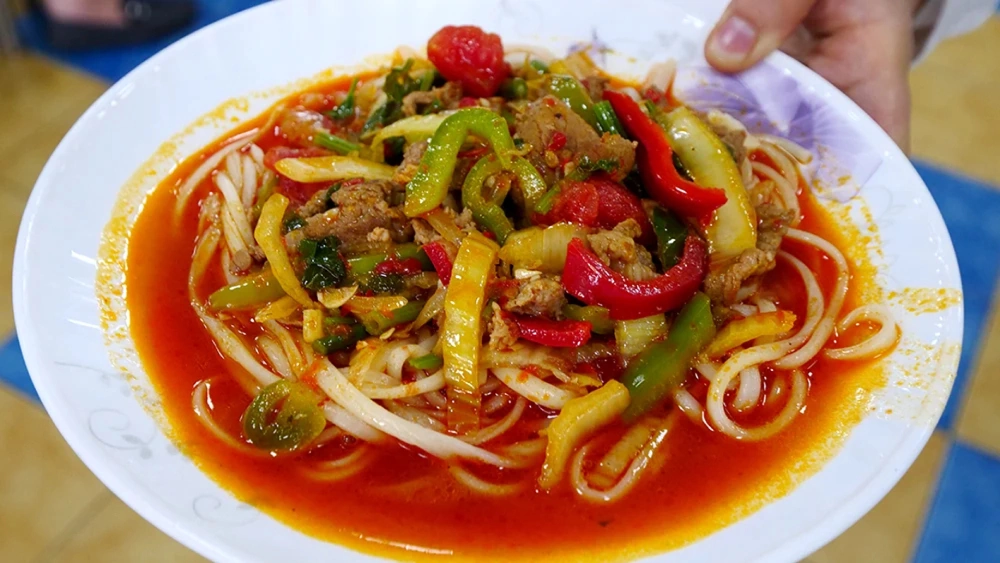
Noodles, vegetables and meat
Chuzma lagman uses hand-pulled noodles, while kovurma lagman is fried. Served with broth or a sauce, lagman makes a meal in its own right.
Make food part of your city walk: stop at a bakery, have lunch at a bazaar, then join in preparing dinner. This guide helps you choose dishes and fit food stops into your trip through Uzbekistan.
Do not try to taste everything in one day. Leave time for an unhurried meal, then choose an unfamiliar dish in the next city, giving each stop its own flavour.
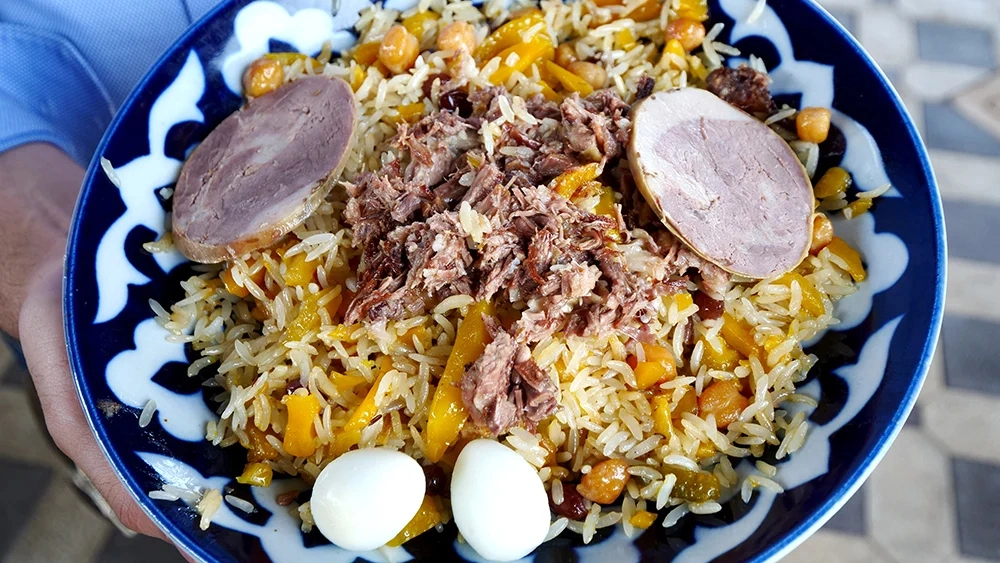
Chuzma lagman uses hand-pulled noodles, while kovurma lagman is fried. Served with broth or a sauce, lagman makes a meal in its own right.
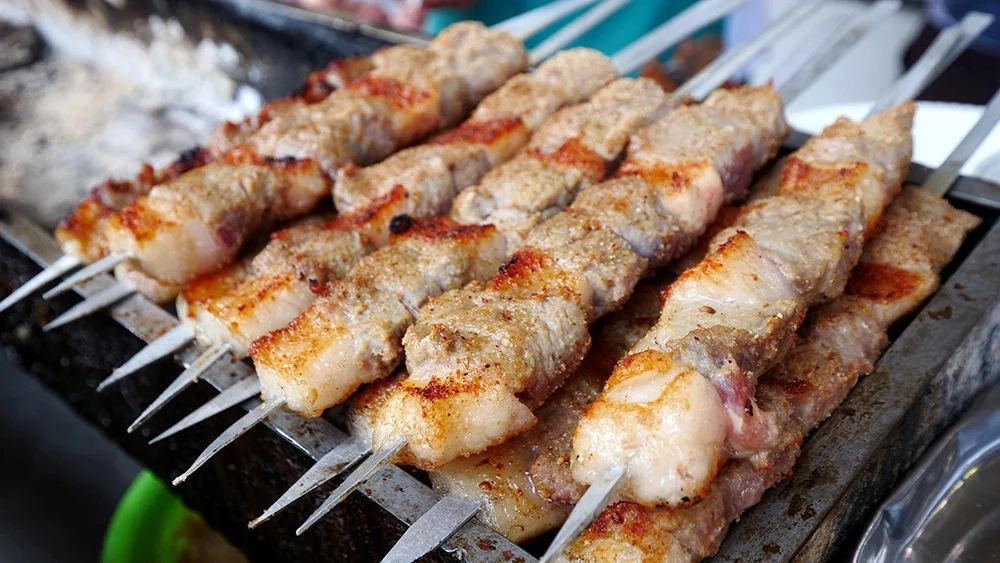
Choose it when you feel like grilled meat with a browned crust. Fresh vegetables go well with this meal.
Fillings include meat, pumpkin, potatoes or greens. Samsa is baked in a tandoor and prepared in other ways too; its shape and pastry depend on the variety.
These large dumplings are usually steamed. Alongside meat versions, there are pumpkin manti; they may be served with suzma, a thick fermented dairy product.
Meat and vegetables form the basis of the broth. Choose this option if you want a hot soup without noodles or dumplings.
Small pieces of dough are wrapped around a meat filling. Chuchvara is served in broth or in a soup with vegetables.
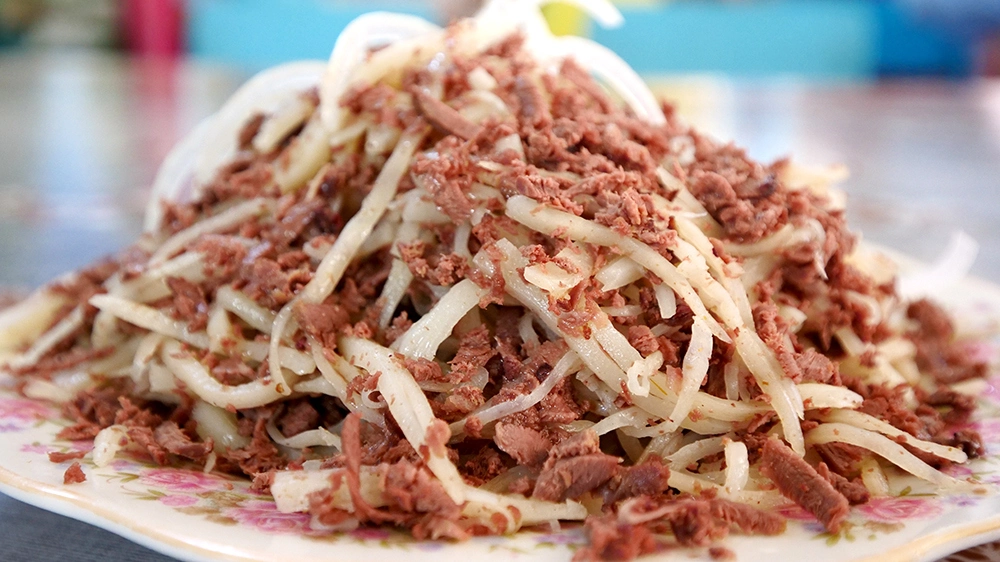
Finely cut noodles and meat distinguish naryn from hot lagman. It is one of the cold dishes found at the prepared-food stalls.
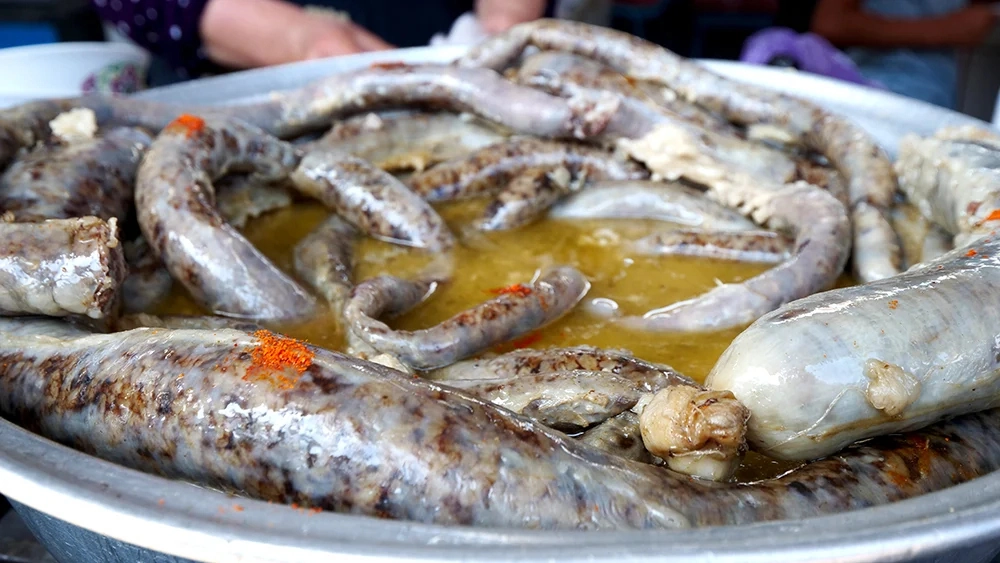
Khasyp is among the cooked foods sold at the bazaar. In the photograph, the sausage is presented whole on a large metal tray.
For cooked food, head to the food stalls beside the large food market pavilion. You can eat at a table or take food away; dishes include samsa, shashlik, khanum, naryn and khasyp. Several vendors operate here, rather than one restaurant with a single menu.
Chigatay is a bazaar area where people come for flatbread and tandoor-baked samsa. Cafés near the bazaar offer a place to pause your walk for a shashlik lunch; more shashlik places can be found around Kukcha Street. The name refers to the area, not a single establishment.
Beside the TV tower, at 1 Iftikhor Street. The Yunusobod branch is one of the plov restaurants in the Besh Qozon chain, where food is cooked in large kazan pots over an open fire.
In the Karasaray Street area. Qorasaroy Lagman, a noodle restaurant in Tashkent’s old town, is an option for lunch while exploring this part of the city.
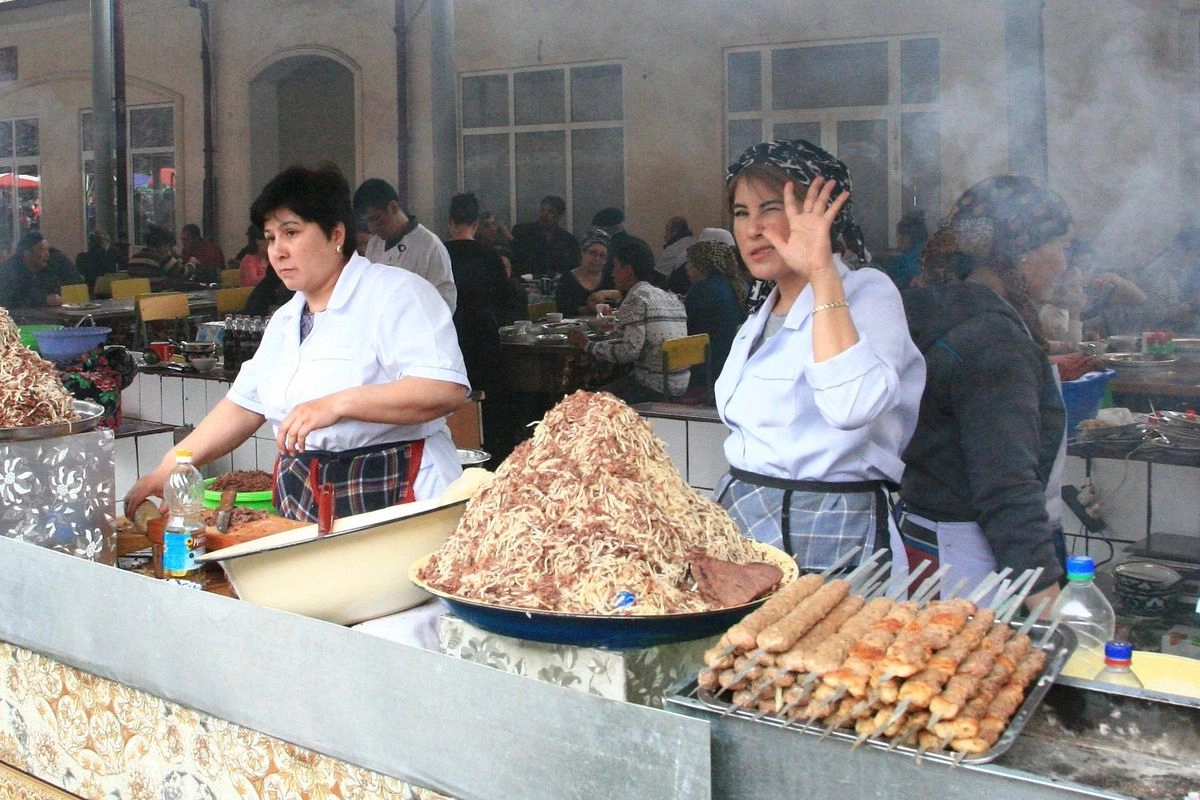
A large platter of naryn and a tray of skewers display the choices side by side, so you can choose before sitting down.
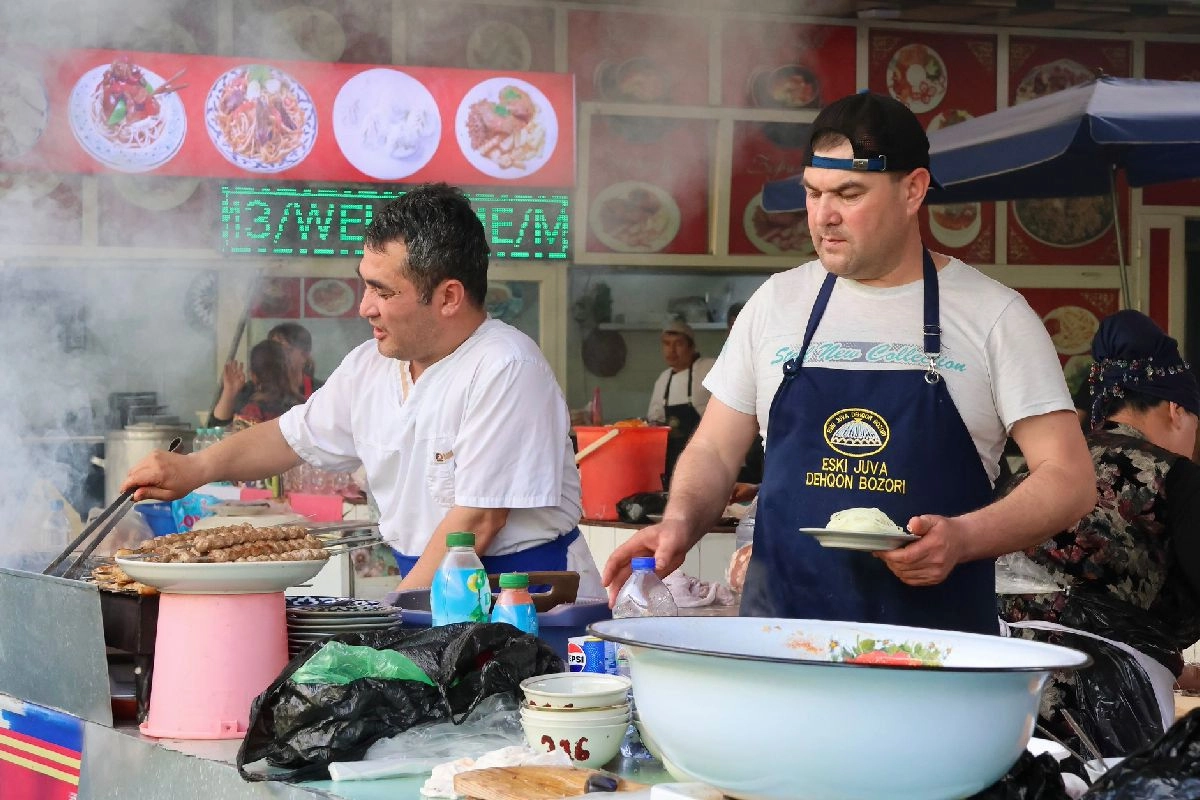
At the grill, shashlik is cooked and plates are assembled for guests.
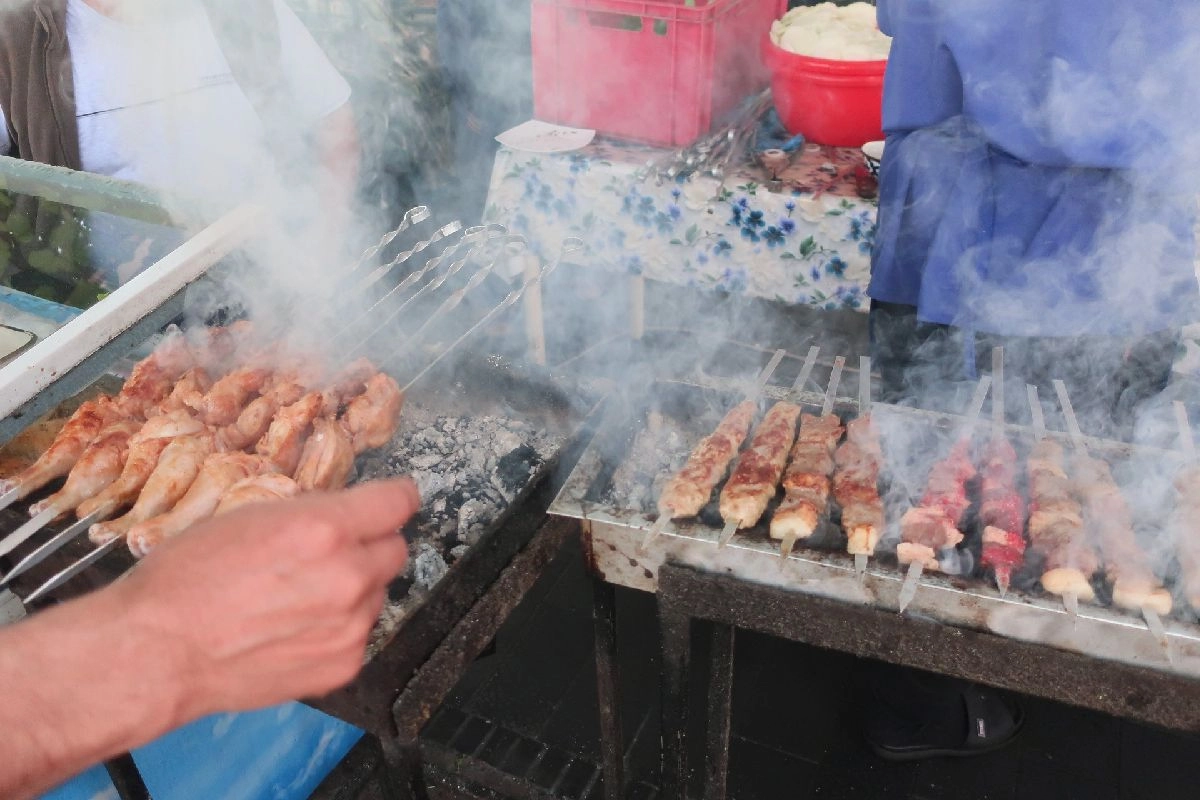
The cook turns the skewers over the charcoal so the meat browns on different sides.
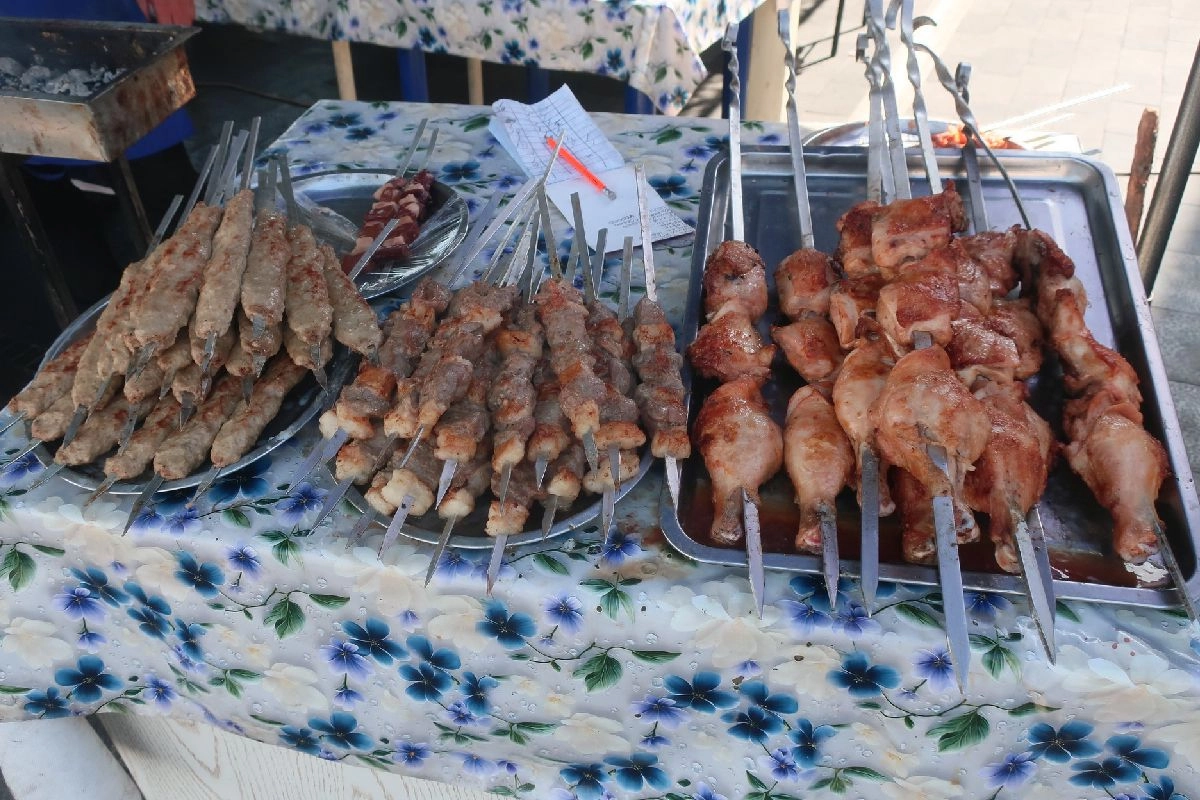
The trays hold chunks of meat, minced-meat shashlik and chicken, showing several varieties to try.
Plov with stuffed vine leaves is one regional variation to look for on a trip through the Fergana Valley.
Jizzakh samsa is known for its large size and meat filling, while Alat samsa has thin pastry. The name on the menu helps you tell these varieties apart.
Shivit oshi is made with dill, which gives the noodles their green colour, and a meat sauce. Another Khorezm dish is tukhum barak, dumplings with an egg filling.
Samarkand is known for its flatbreads. The Galaosiyo variety is made from a dense dough; try it to compare with the bread you have tasted in other cities.
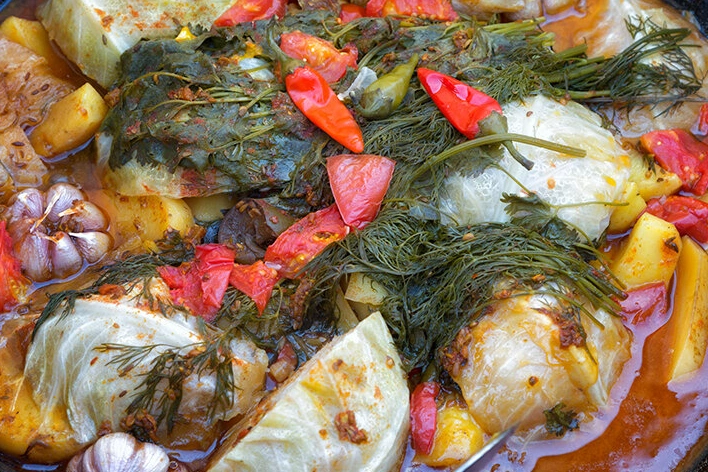
Roughly cut vegetables and meat are layered in a kazan and cooked over a low heat. The finished dimlama is served on a large platter.
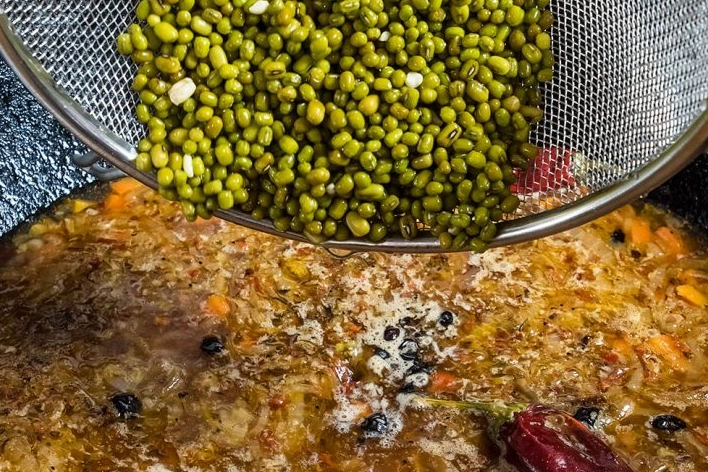
For moshkichiri, also called mashkichiri, mung beans are cooked until soft before rice is added. Some recipes include meat and vegetables; the finished dish is served with herbs and a tomato and onion salad.
When baking in a tandoor, the dough is attached to the oven’s inner wall. For breakfast, flatbread can be paired with kaymak, fruit and tea.
Green and black tea are served in a teapot with small bowls called pialas. You may see tea poured back into the pot and then served in small amounts. This is a custom of hospitality, not a ceremony that visitors must follow.
Halva, parvarda and navat accompany tea. Fresh seasonal fruit makes a fruit platter, while dried fruit offers a different taste of the same harvest.
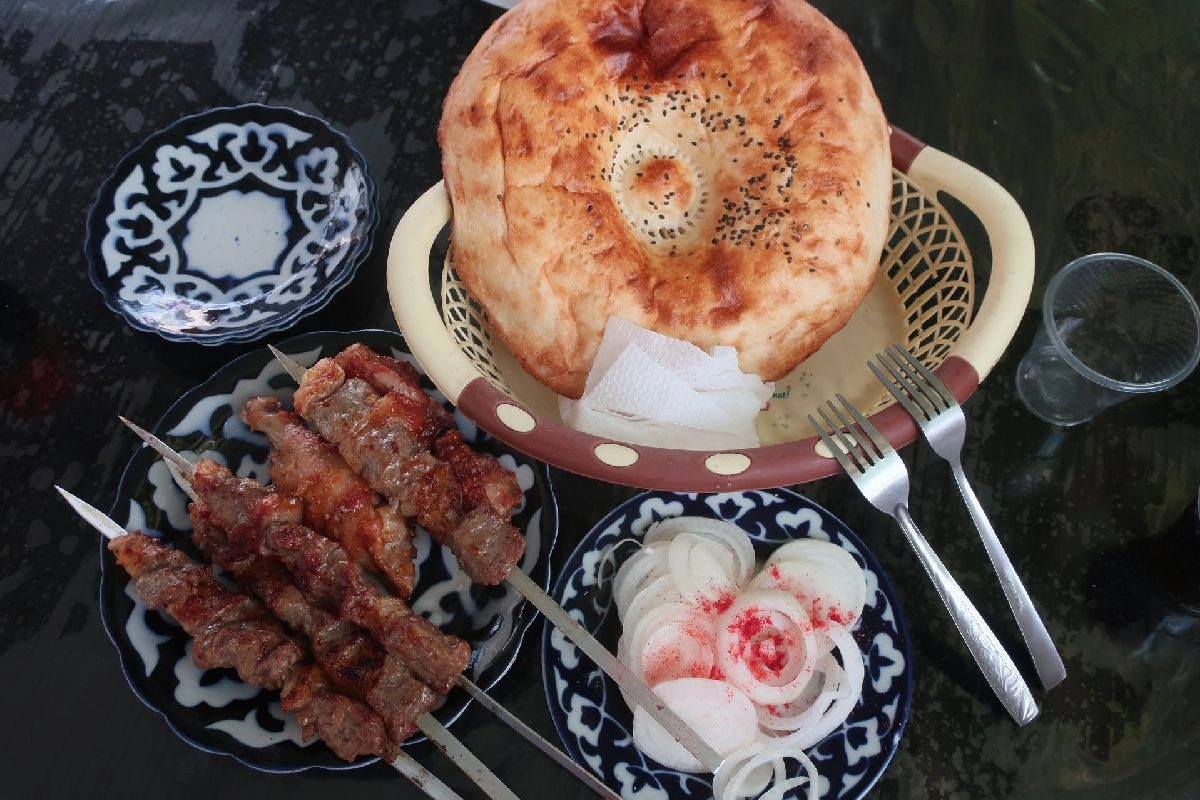
Bread is not just for breakfast: here, flatbread is served with shashlik and sliced onions.
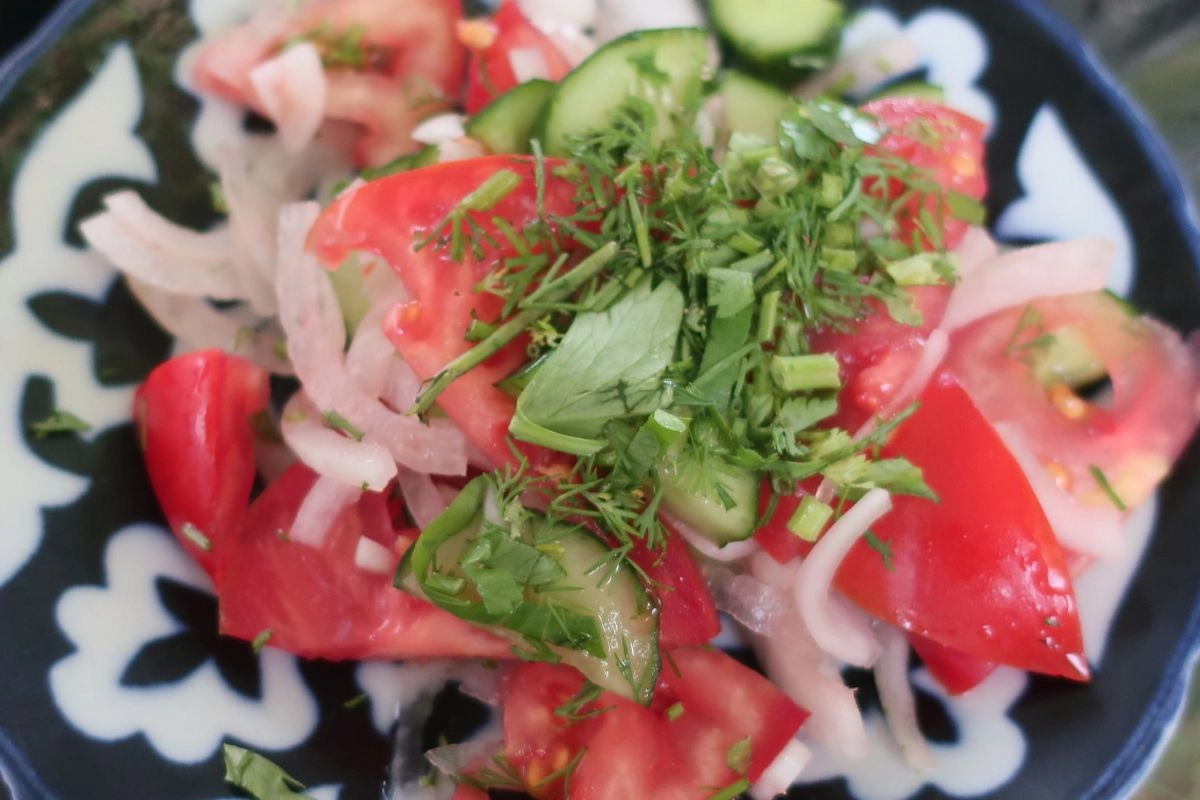
Chunky vegetables, thinly sliced onions and herbs make a fresh accompaniment to hot dishes.
Before ordering, ask whether the price is per item, per portion or by weight, and whether bread, drinks and service are included. For a shared dish, agree on the number of people and ask for individual plates.
If you are going for a particular dish, check when it is prepared and whether portions are available. For children, discuss spiciness and bones, and ask for sauces on the side. At a bazaar, ask permission before tasting produce or photographing a vendor.
Check more than the filling: a dish may contain meat stock, sheep tail fat, butter, milk or eggs. Removing meat from cooked plov does not change how it was prepared. For a vegan order, tell the cook every ingredient you need excluded.
Name the specific allergen and ask staff to check the dough, sauces, toppings and possible contact during preparation. If they cannot confirm the ingredients and preparation conditions, choose another dish or place. Tell your hosts about dietary restrictions too if you are invited to someone’s home.
In 2016, the culture and traditions of preparing palov in Uzbekistan were inscribed on the Representative List of the Intangible Cultural Heritage of Humanity. The status recognises a living tradition; it is not a certificate for an individual restaurant or a single recipe.
No. If this matters to you, ask the establishment to confirm the origin of the meat and compliance with the preparation requirements you need.
Before buying, check food import rules for your destination country and your carrier’s conditions. Products with clear ingredient and storage labels are practical for travel; whether a particular item is permitted depends on your route.
Choose a class in Tashkent if you would like to take part in cooking. To include a food stop in a longer itinerary, send us your travel dates, cities and preferences.
During the class, you prepare and taste your chosen dish: plov, lagman, kazan kebab, dimlama or moshkichiri. The date, language and ability to accommodate dietary restrictions are confirmed on request; transfers are not included in the base price.
Plan your stops with our Uzbekistan city guides. For visiting etiquette, traditions and crafts, see Culture of Uzbekistan.
Practical advice on portions and ingredients is in the How to order section.
Find information about the organiser and ways to get in touch on the Central Asia Journeys page.