Hospitality, skilled hands and music with a sense of place
A cup of tea, a length of patterned cloth or a piece of music can open a conversation about Uzbekistan. Its culture is easier to appreciate when you look beyond the finished object: who made it, how it is used and what it means to the people around you.
Use this guide to recognise a few important traditions and approach everyday encounters with care. Customs vary between families, communities and settings; a host’s invitation or a caretaker’s guidance is more useful than a rigid list of national rules.
HospitalityTraditional craftsMusic and dance
Look closer notice the skill behind the object
Ask first respect the person and the place
Updated 21.09.2026
Culture begins with the people who practise it
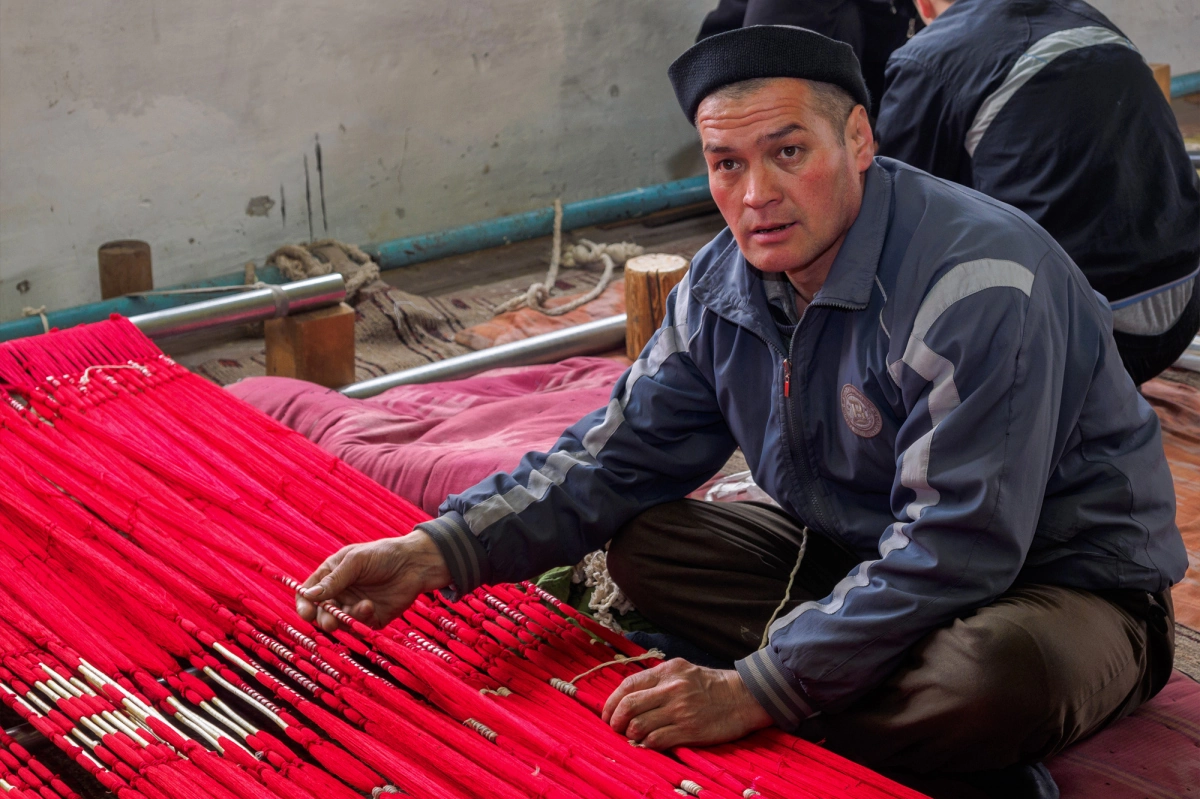
A textile craftsman at work: dyed threads reveal a different side of Uzbekistan’s cultural heritage.
Start with a question: do you want to recognise regional styles, watch something being made or try the technique yourself? A museum visit helps you compare finished objects, materials and their original uses. The Museum of Applied Arts in Tashkent, for example, brings together ceramics, embroidery, clothing and other crafts. Read the labels for place, date and use; similar-looking objects can belong to different traditions.
Choose a live demonstration to understand a particular production step, and a separately arranged lesson if you want to make something yourself. Before confirming, ask which process will be shown, who will explain it and in which language, how long the visit lasts, and what the fee covers. Leave time to ask the maker how they learned the craft and what they have changed in their own work. One well-explained visit can be more useful than a succession of short shopping stops.
Hospitality: accepting an invitation with care
Tea has an important place in Uzbek hospitality. In some settings it is served in small bowls and offered in repeated, modest portions. Treat the occasion as a chance to spend time together, rather than trying to decode every gesture. Ask where to sit, follow your host’s lead about shoes and allow people to choose whether they want a handshake or a different greeting.
An invitation into a home is personal. Confirm that it is convenient and mention dietary needs before a meal. You can decline food or another drink politely; enjoying an encounter does not require agreeing to everything. A wedding or family gathering is not automatically open to visitors because music can be heard from the street. Attend only when the hosts have clearly invited you, and check what participation they are comfortable with.
Life in the mahalla: neighbours and community
In Uzbekistan, a mahalla is a neighbourhood community with a social life shaped by the people who live there. Mutual help, respect for older neighbours and the passing of customs between generations are part of this tradition. Everyday support can matter as much as a public celebration. Ask residents or your guide how these relationships work locally: practices differ between communities and households, and a short visit offers only a glimpse.
Gulbozor Mahalla in Tashkent provides a concrete example near Chorsu Bazaar and Kukeldash Madrasah. Its tourist street brings together craft workshops, bakeries and traditional architectural details, including carved wooden columns. Notice the relationship between homes, small businesses and shared street space. This area has been adapted for visitors, so it should not be taken as a picture of every Uzbek neighbourhood. Keep doorways clear and let everyday routines continue while you visit.
Navruz: spring traditions and shared celebrations
Navruz, also known as Nowruz, is a spring celebration in Uzbekistan. Alongside public festivities, its cultural meaning can be seen in visits between relatives and neighbours, shared food and acts of generosity. Sumalak, made from sprouted wheat, is one of its best-known traditions: preparing it together can bring people around a cauldron for conversation, music and dancing.
For a visitor, food preparation, music and visiting offer ways to understand community life. Ask what is being prepared and which customs matter to the people you meet. At a public celebration, leave room for participants and follow the organisers’ guidance. Public events vary by place and year; confirm the local programme before travelling.
Traditional crafts: textiles, embroidery, ceramics and woodcarving
Ikat, atlas and adras
Ikat patterns are created by binding and dyeing threads before weaving. The design therefore depends on work done long before the finished cloth appears. In Margilan, atlas and adras are part of a continuing textile tradition supported by the Crafts Development Centre. Look at how the colours meet and how the design follows the threads. When considering a purchase, ask about the fibre, weaving method and maker; a familiar pattern alone does not establish how a fabric was produced.
Suzani embroidery
A suzani is an embroidered textile, distinct from a woven ikat design. Historical examples from present-day Uzbekistan and Tajikistan decorated homes and formed part of bridal dowries. Some were worked in separate strips that were later joined. In a museum or shop, look for the stitching, the arrangement of the border and the relationship between the central motifs. Ask whether a piece is newly made, who embroidered it and what materials were used; age and origin should not be guessed from colour alone.
Rishtan ceramics
Rishtan, in the Fergana Valley, is associated with pottery, red clay and blue or azure decoration. Start by looking at the shape as well as the painted surface: the curve of a bowl or the proportions of a jug are part of the maker’s work. Ask how the piece was formed and decorated. If you intend to use it for serving food, ask the producer about its intended use and care instead of assuming every decorative ceramic is tableware.
Woodcarving: doors, columns and objects
Woodcarving connects craft with the buildings people use. At Tash-Hauli Palace in Khiva, carved doors and columns provide examples of architectural woodwork. Look at the depth of the relief, how a pattern turns a corner and how the ornament fits the shape of the object. In a contemporary workshop, compare these details with a new piece and ask which wood and tools the maker uses. A decorative pattern alone cannot establish an object’s age or origin.
Music and dance: listen for a particular tradition
Shashmaqom and Bukhara
Bukhara is one of the traditional centres of Shashmaqom, a musical heritage recognised by UNESCO. Its long development connects music with poetry and other intellectual traditions. Before choosing a concert, ask what repertoire will be performed and whether someone can introduce it in a language you understand. Knowing a piece’s name and context can make the listening experience more rewarding than a programme described only as a “national show”.
Lazgi and Khorezm
Lazgi is a dance tradition associated with Khorezm. UNESCO describes both staged forms with set movements and interpretive forms that allow improvisation. Watch how movement changes with the music and how performers convey feeling, rather than expecting every rendition to be identical. Confirm the actual programme for your date, as this guide does not list current performances.
Respectful visits: people, sacred places and working spaces
At religious sites
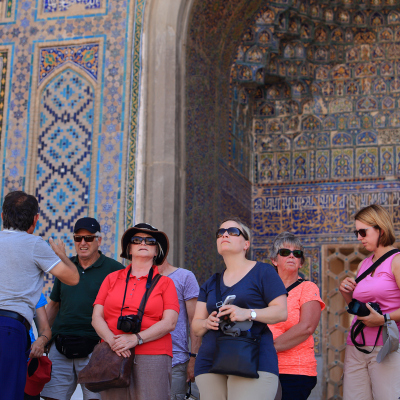
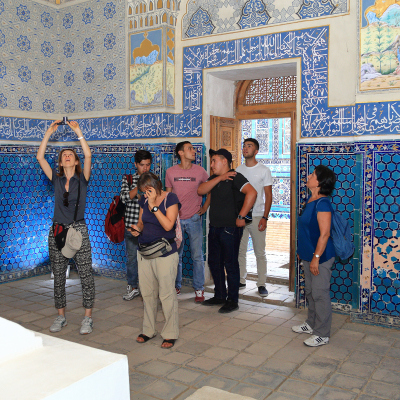
Approach an active place of worship as a place used by a community. Choose modest clothing for the visit and follow the entrance signs or caretaker’s instructions about covered areas, head coverings and shoes. Visitor access can differ between a courtyard, museum area and prayer space. Keep conversation quiet and give worshippers room. If you are unsure whether you may enter, wait and ask; a historic building’s appearance does not tell you its present access rules.
Taking photographs
Ask before making a person the subject of a close photograph, and accept a refusal without negotiation. For children, seek the accompanying adult’s permission as well. Museum and religious-site photography rules are specific to the venue: look for signs and check with staff instead of assuming that permission outside also covers interiors. Check separately before using flash, a tripod or video equipment.
Buying with a better conversation
Ask the seller who made the object, where it was made and how to care for it. If you want to discuss the price, do so courteously and accept that a maker or shop may have a fixed price. A receipt and a clear description are useful records of a purchase. For anything described as antique or culturally valuable, check the applicable export requirements before buying; a seller’s reassurance alone is not a reliable answer.
Inside a working workshop
A workshop is someone’s working space. Keep bags away from tools and unfinished work, and wait for an invitation before touching either. Let the maker finish a delicate step before asking questions, and ask before recording a process. If you want to take part, confirm the materials and supervision provided. Agree any demonstration or lesson fee before it starts, and ask whether a purchase is expected.
Questions about culture and customs in Uzbekistan
Will a cultural visit be explained in English?
Ask the venue or organiser before booking; do not assume that the practitioner will explain the work in English. If an interpreter is needed, agree who will provide one and whether this is included. Tell your guide which techniques interest you so they can help with craft terms. During the visit, ask one question at a time and allow time for the answer and interpretation.
Can children take part in a craft lesson?
Check with the workshop about the child’s age, the tools and materials involved, the lesson’s length and the supervision provided. Ask which steps children can do themselves and whether a shorter activity or breaks are possible. If the lesson produces an object, find out whether it will be ready to take away that day or requires later collection.
Does UNESCO recognition mean a workshop is open to tourists?
No. Recognition of a tradition or safeguarding practice is not a visitor timetable or a guarantee of a particular demonstration. Contact the venue or your organiser about access and what is actually offered before including it in your plans.
What if the process I want to see is not running?
Check the specific production step before travelling: seeing finished work does not mean you will see it being made. Tell the organiser whether dyeing, weaving, carving or decoration is the reason for your visit. If that step will not be taking place, decide in advance whether an explanation with samples, another workshop or a different date would suit you.
Bring a cultural interest into your trip
Tell CAJ which craft or performance tradition interests you, where you will be staying and which language you need. Ask for the proposed venue, visit format and any separate charges before confirming. Particular makers, demonstrations and performances depend on arrangements for your dates.
The published programme includes a ceramics workshop in Rishtan and the Yodgorlik Silk Factory in Margilan. Read the full itinerary and confirm the visit arrangements for your dates.
Explore CAJ’s published spring itinerary with a festive day in Samarkand and Urgut. Check the tour page for departure dates and inclusions; particular celebrations follow the local organisers’ schedule.
Explore the published route through Tashkent’s old city and central sights. If you would like to include a walk through Gulbozor Mahalla, ask CAJ to confirm it separately before booking; it is not currently listed in this tour’s programme.
For the historical cities and the connections between them, explore Uzbekistan’s Silk Road.
Before buying older artworks or objects described as antiques, consult the Uzbekistan customs guide and verify the requirements that apply to your purchase.
After you submit your request, our team usually replies the same day. If your request is sent late in the evening or outside working hours, we will get back to you as soon as business hours resume.