Khiva Travel Guide: UNESCO IchanβKala & 1β2 Day Itinerary
Khiva πΊπΏ β what to see, a 1β2 day itinerary, and practical travel tips
One of Uzbekistanβs most compact and walkable destinations β ideal for a Khiva walking tour.
This Khiva travel guide covers the essentials: the UNESCOβlisted walled city of IchanβKala / Itchan Kala, the top things to do in Khiva, itineraries for 1β2 days, plus practical advice on getting to Khiva, accommodation, and food.
Why Khiva is called an open-air museum
Khivaβs historic core β IchanβKala (Itchan Kala) β is an exceptionally wellβpreserved medieval walled city, where madrasahs, minarets, mosques, and palaces come together as a single architectural ensemble.
Perfect for unhurried walks β without constant transfers or long drives.
Where is Khiva located
Khiva is in western Uzbekistan, in the Khorezm (Khwarazm) Region. The city is closely tied to ancient Khorezm β an oasis civilization shaped by caravan routes, trade, and a distinctive local culture that still shows in architecture and daily life.
For travelers, the key point is that Khiva is not a sprawling metropolis, but a compact historic city. Most of the main Khiva attractions are concentrated inside the fortified walls of IchanβKala (Itchan Kala), so itβs easy to plan a Khiva itinerary around walking β with a clear, logical route.
The nearest major transport hub is Urgench. Most arrivals to the region go via Urgench first, and then travelers continue to Khiva by transfer or taxi.
Quick answers
Where is Khiva?
In western Uzbekistan, in the Khorezm Region.
What is the nearest city?
Urgench is the regionβs main transport hub.
Can you explore Khiva on foot?
Yes. IchanβKala is compact,
so the main sights are easy to visit on a walk.
Route geography:
Khiva is most often visited together with other major cities in Uzbekistan.
The classic order looks like:
Tashkent β Samarkand β Bukhara β Khiva.
For an extended journey, travelers add Khorezmβs surroundings (AyazβKala, ToprakβKala) and, if needed, continue toward Turkmenistan via the ShavatβDashoguz border crossing.
Urgench Airport and flying to Khiva
The nearest airport to Khiva is Urgench International Airport. It is located approximately 35 km from Khiva and is the main air gateway to the Khorezm Region.
Urgench Airport has regular flights from Tashkent, plus seasonal and charter services, depending on the time of year. For most travelers, flying to Urgench is the fastest way to reach Khiva, Uzbekistan.
After landing, the drive from Urgench to Khiva typically takes 40β50 minutes. A preβbooked transfer is the most convenient option, especially with luggage or a lateβevening arrival.
Quick answers
Is there an airport in Khiva?
No.
The nearest airport is in Urgench.
How far is Urgench to Khiva?
About 35 km,
typically 40β50 minutes by car.
What is the easiest way to get to Khiva?
A preβbooked transfer on our website
is the safest and most reliable option.
Important:
When planning flights, itβs best to arrange your transfer time in advance,
as arrivals can be early in the morning or late in the evening.
In organized tours, the transfer from Urgench Airport to Khiva is usually included, making arrival-day logistics much simpler.
Trains to Khiva: rail tickets from Tashkent and Bukhara
You can reach Khiva not only via Urgench Airport, but also by train. Rail is especially convenient for travelers following the classic Uzbekistan itinerary Tashkent β Samarkand β Bukhara β Khiva and who want to lock in logistics in advance.
Train Tashkent β Khiva
The Tashkent β Khiva route suits travelers who prefer long-distance rail and want to arrive in Khiva without switching to a plane. Depending on the timetable, night trains may be available, which helps you save daylight hours.
When traveling from Tashkent, it is recommended to book tickets in advance, especially during high season and holiday periods.
Train Bukhara β Khiva
The Bukhara β Khiva route is one of the most popular in western Uzbekistan, as it continues the journey naturally after Samarkand and Bukhara.
Travel time depends on the specific train, the service class, and the current schedule. For comfortable planning, check options early and choose a departure time that works for your route.
Where to check schedules and buy tickets?
Current departures,
Uzbekistan train schedules,
and the ability to buy
rail tickets in Uzbekistan
are available online.
In high season, it is better to book in advance to avoid missing seats on the best dates.
Why Khiva is one of the most compelling cities to visit in Uzbekistan
Khiva feels different from other historic cities in the region because the atmosphere is cohesive and immersive. It is not a βset of monumentsβ scattered across a modern city, but one connected space where walls, lanes, minarets, and palaces form the full image of an old Eastern city. That is why many travelers remember Khiva as the most atmospheric stop on an Uzbekistan itinerary.
A cohesive Ichan-Kala
The inner fortress of IchanβKala (Itchan Kala) is the heart of Khiva and its main highlight. Everything is close: your walk does not require complicated logistics, and the attractions connect into a clear, easy route. That βcity within wallsβ feeling is hard to find elsewhere in Uzbekistan.
Walkability
Khiva is one of the best cities for a 1β2 day visit. In IchanβKala, most sights are within easy walking distance, so you can build your Khiva itinerary without taxis or constant transfers. The pace stays relaxed, and you get more time to actually enjoy the city.
Strong impressions
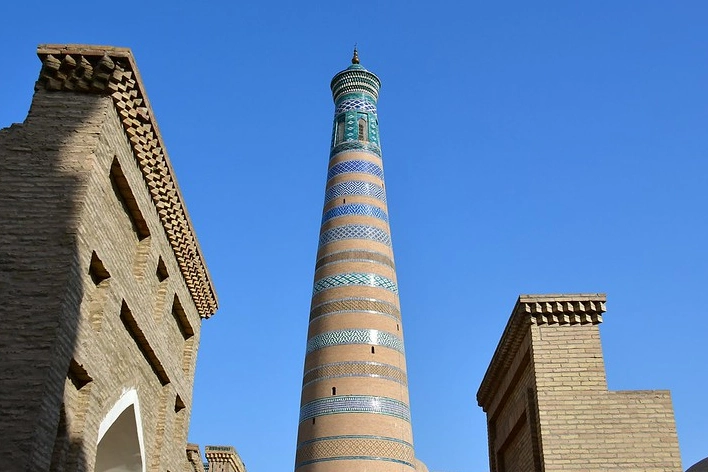
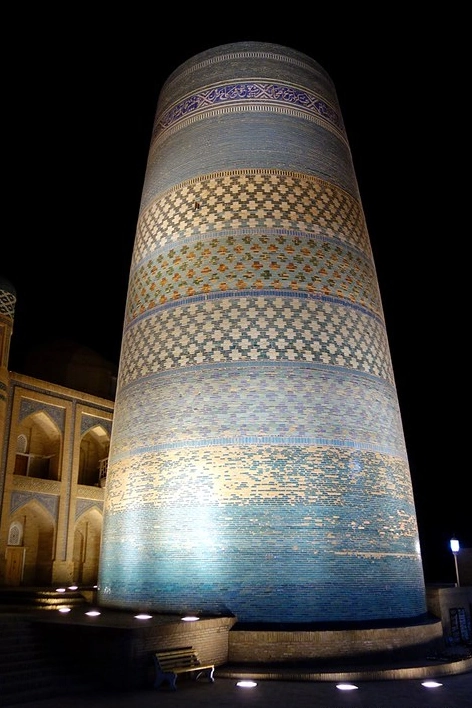
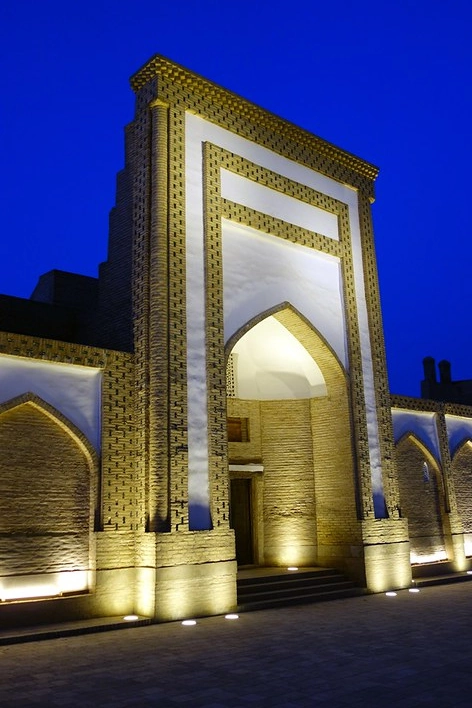
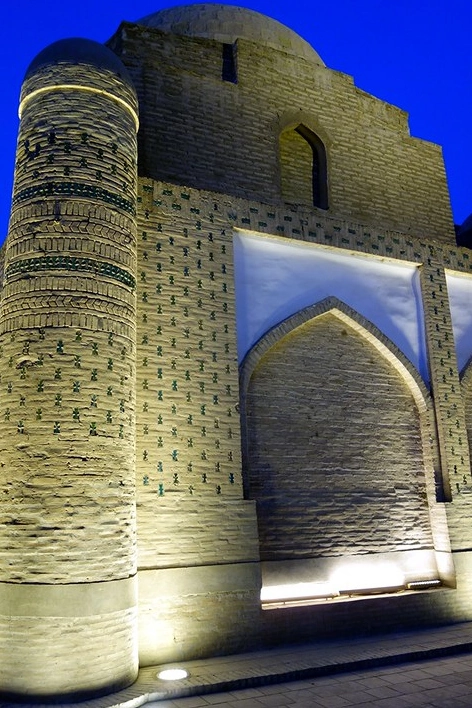
Kalta Minor, the Islam Khoja Minaret, Kuhna Ark, and Tash Khauli create Khivaβs iconic silhouette. In the evening, IchanβKala becomes especially beautiful: soft light, a calmer rhythm, fewer people β and the city feels deeper. For photographers and atmosphere lovers, Khiva is one of the strongest points on the Silk Road route.
How many days do you need in Khiva?
One full day is enough for IchanβKala, but 2 days lets you add day trips to the surroundings (AyazβKala and ToprakβKala) while keeping a comfortable pace.
What to see in Khiva
Khiva is one of the few cities in Uzbekistan where historic attractions feel like a single, coherent space. The key sights are concentrated inside the walls of IchanβKala, and walking between them takes just a few minutes.
Exploring Khiva usually revolves around architectural ensembles, palaces, and minarets that reflect different periods of Khorezm (Khwarazm) history. Thanks to the cityβs compact layout, sightseeing does not require complicated logistics and works well even if you have limited time.
Ichan-Kala β the historic core
IchanβKala β Khivaβs inner fortress, is listed as a UNESCO World Heritage Site. It contains the cityβs main monuments: madrasahs, minarets, palaces, and residential quarters. It is the best place to start your Khiva visit.
Minarets and madrasahs
Khivaβs skyline is defined by Kalta Minor, the Islam Khoja Minaret, and the many madrasahs that create the cityβs recognizable silhouette. These landmarks are easy to see on a Khiva walking tour inside IchanβKala.
Palaces and citadels inside the city
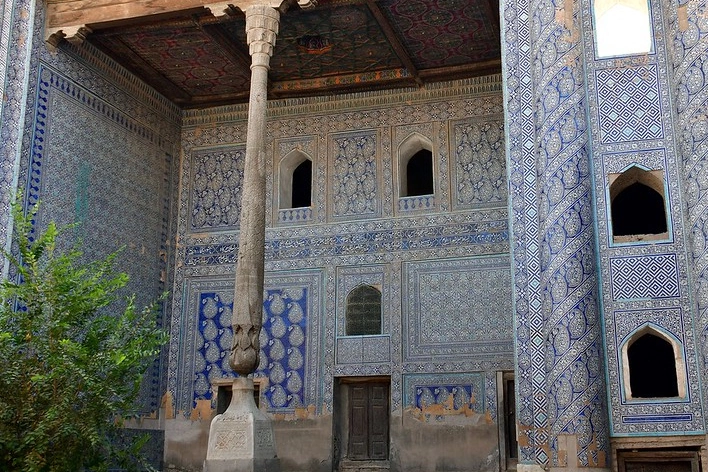
Khiva preserves palace complexes that reflect the lives of Khorezm rulers. Highlights include Kuhna Ark, the former khansβ citadel, and Tash Khauli, a palace with richly decorated interiors. These places help you understand how power and everyday life were organized in past centuries.
Khiva surroundings
Beyond Khiva itself, archaeological sites outside the city are also worth visiting. These include the fortresses of AyazβKala and ToprakβKala, located in the desert zone of ancient Khorezm. They are typically visited as a day trip if you have an extra day.
Can you visit Khiva independently?
Yes. Thanks to the compact layout of IchanβKala, the main Khiva attractions are easy to explore on foot. A guided tour adds deeper historical context, but it is not required.
Ichan-Kala β the historic center of Khiva (UNESCO)
IchanβKala is Khivaβs inner fortress β a preserved medieval city surrounded by powerful clay walls. This is where most of the architectural and historical heritage of Khorezm is concentrated. Khivaβs historic center was added to the UNESCO World Heritage List in 1990.
What makes IchanβKala unique is that it is not a separate βmuseum complexβ, but a living historic environment: madrasahs, mosques, minarets, palaces, and residential quarters form one continuous space. Walking through IchanβKala feels like moving through different eras without leaving the fortress walls.
Top sights in Ichan-Kala
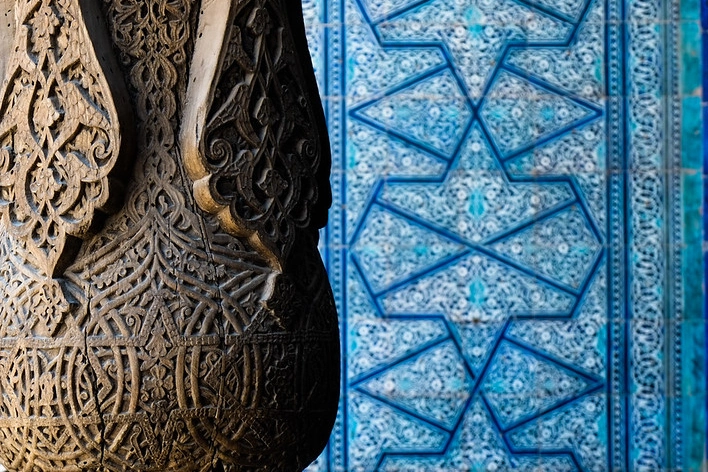
Inside the fortress youβll find Khivaβs key landmarks: Kalta Minor, the Islam Khoja Minaret, Kuhna Ark, Tash Khauli Palace, the Juma Mosque with its distinctive carved wooden columns, as well as dozens of madrasahs and mausoleums. Most sights are just a few minutesβ walk from each other.
Walking and the cityβs rhythm
IchanβKala is best experienced at an unhurried pace. Mornings are quieter, daytime works well for museums, and evenings bring a special atmosphere: softer light, warm walls, and a calm walking rhythm. Thanks to its compact layout, exploring is straightforward even without complex navigation.
How much time do you need for Ichan-Kala?
A few hours is enough for a quick overview,
but for a complete visit
with museums and architectural complexes,
plan at least half a day,
and ideally a full day.
Many travelers like to return to IchanβKala several times in one day to see the fortress in different light and at different times.
Ayaz-Kala and Toprak-Kala β fortresses of ancient Khorezm
Outside Khiva, in the desert zone of ancient Khorezm, you can visit unique archaeological sites β the fortresses of AyazβKala and ToprakβKala. These monuments come from an earlier period than Khiva itself and show what fortified settlements looked like long before medieval cities emerged.
Visiting AyazβKala and ToprakβKala is usually planned as a separate day trip from Khiva. The route crosses open desert landscapes, creating a strong contrast with the dense urban fabric of IchanβKala and making the overall travel experience even richer.
Toprak-Kala
ToprakβKala is considered one of the earliest capitals of Khorezm. It is a major archaeological complex dated to the 1stβ4th centuries CE. The site once included palatial structures, administrative buildings, and residential quarters, making ToprakβKala a key source of knowledge about the regionβs early statehood.
Distance from Khiva: about 89 km.
Ayaz-Kala
AyazβKala is a complex of several fortresses built on elevated terrain. It offers panoramic views over the desert expanses of Khorezm. AyazβKala is often considered one of the most photogenic archaeological sites in the region.
Distance from Khiva: about 98.7 km.
Distances between sites:
Khiva β ToprakβKala β 89 km
Khiva β AyazβKala β 98.7 km
ToprakβKala β AyazβKala β 36.5 km
Typically both fortresses are visited in one day: depart Khiva in the morning and return in the second half of the day. For this route, it is recommended to use a car or an organized tour.
Do you need to visit Ayaz-Kala and Toprak-Kala?
If your schedule allows, these fortresses significantly expand your understanding of ancient Khorezm and show the region beyond Khivaβs city environment.
Nature and reserves near Khiva
Beyond the architecture and history of IchanβKala, the Khorezm region is also interesting for its natural areas linked to the lower reaches of the Amu Darya River. These landscapes offer a very different side of the region, contrasting sharply with the desert scenery around Khiva.
The main natural site near Khiva is the Lower Amu Darya State Biosphere Reserve, also known as the BadaiβTugai Nature Reserve (BadaiβTugai). It is the same place β the name may appear differently across sources and languages.
Quyi Amudaryo davlat biosfera rezervati (Badai-Tugai)
The biosphere reserve is located in the Amu Darya floodplain forests and was created to protect tugai ecosystems β a rare type of riverine vegetation typical for Central Asian rivers. Here you can see natural landscapes characteristic of the wider Aral Sea region.
Distance from Khiva: approximately 108 km one way. Visiting the reserve requires advance transport planning and is usually considered a separate day trip.
What to keep in mind:
A biosphere reserve is a protected natural area,
not a city park.
A visit is realistic
if you have transport,
enough time,
and take seasonality into account.
In practice, a trip to Quyi Amudaryo / BadaiβTugai works best as part of an extended Khorezm program, or as a link in a broader itinerary across Karakalpakstan and the Aral Sea region.
Are Badai-Tugai and Quyi Amudaryo different places?
No. It is the same biosphere reserve, known under different names in Uzbek and international sources.
More details about natural areas and routes can be found on our page about Uzbekistan nature reserves .
ShavatβDashoguz border: crossing from Uzbekistan to Turkmenistan
Khiva can also serve as a convenient starting point for travel onward to Turkmenistan. The main overland border crossing in this region is ShavatβDashoguz, connecting Uzbekistanβs Khorezm Region with Dashoguz Province in Turkmenistan.
The ShavatβDashoguz border crossing is most commonly used by travelers continuing their route from Khiva toward Dashoguz, and then onward to other regions of Turkmenistan. Geographically, this option is considered the most logical for combined routes across western Central Asia.
Location and distance
The Shavat checkpoint is located in the Khorezm Region, about 60 km from Khiva. The drive to the border usually takes 1β1.5 hours depending on traffic and your chosen transport.
On the Turkmen side, the exit checkpoint is near Dashoguz, a major administrative center of the region.
Crossing procedure
The border procedure includes passport and customs control on both sides. It is important to note that at ShavatβDashoguz there is a neutral zone between the two checkpoints, which you often need to cross on foot with your luggage.
- Shavat (Uzbekistan): passport control and customs inspection, after which you exit the checkpoint area.
- Neutral zone: a stretch of about 1.5β2 km between checkpoints. Most often you walk it yourself, carrying/pulling your luggage. Local transport (taxis/minibuses) may exist, but it is not guaranteed and can require waiting and onβtheβspot payment.
- Dashoguz (Turkmenistan): second passport and customs control according to the countryβs entry rules.
When planning the crossing, always add time buffer: in addition to formalities, the walking section itself may take 15β30 minutes, and queues/waiting can significantly extend the total time.
Neutral zone: what it looks like in practice
- You should expect to walk: after leaving the first checkpoint, you do not βget into a car immediatelyβ β first you need to reach the second checkpoint on foot. Suitcases, backpacks, childrenβs items β you carry or roll everything yourself.
- Conditions can be uncomfortable: open space, dust/wind, summer heat, winter cold. There are usually no cafΓ©s, water, or decent facilities, so bring water and wear comfortable shoes.
- Transport through the neutral zone is optional: sometimes local taxis/minibuses operate, but on other days there may be none, or you may have to wait. Plan as if you will walk.
- Connectivity and meeting on the other side: a driver/guide usually does not cross the border with you, so agree on a meeting point after the second checkpoint, and keep key contacts available (preferably offline).
Important notes:
- To enter Turkmenistan, you need a visa or relevant permit in advance (depending on citizenship).
- Checks can be thorough, and rules/opening hours may change β before traveling, confirm current requirements.
- In practice, ShavatβDashoguz is most often used in preβarranged itineraries, where logistics, the meeting driver on the other side, and timing for the neutral zone are planned in advance.
Can you cross the border from Khiva independently?
Yes, if you have the required documents. But be aware of the format: you pass both controls and the neutral zone on foot with your luggage, and you must plan transport on the other side (meeting point, connectivity, time buffer). That is why many travelers choose an organized transfer β it removes most logistics risks.
Khiva itineraries: 1β2 days without rushing
Khiva is a rare example of a city where an itinerary is easy to adapt to different amounts of time. Thanks to the compact layout of IchanβKala and the logical structure of the sights, you can plan either 1 day or 2 days without losing the sense of completeness.
Below are two practical scenarios that fit most travelers and can be easily combined with day trips around Khorezm.
Khiva in 1 day
Morning: enter IchanβKala, Kalta Minor, Juma Mosque, a walk along the central streets of the Old City.
Daytime: Kuhna Ark, Tash Khauli, madrasahs and mausoleums, museums inside IchanβKala.
Evening: climb the Islam Khoja Minaret, a relaxed walk through IchanβKala, photos in evening light, and dinner in the Old City.
This itinerary is ideal if Khiva is one stop on a longer Uzbekistan trip and your time is limited.
Khiva in 2 days
Day 1: a relaxed visit to IchanβKala: Kalta Minor, Juma Mosque, Kuhna Ark, Tash Khauli, museums and inner courtyards. In the evening β a walk in soft light.
Day 2: choose one direction: extra time in IchanβKala, or a day trip β AyazβKala and ToprakβKala, or a visit to natural areas around Khorezm.
Two days is considered optimal: it lets you feel the city more deeply and avoids an overloaded pace.
Which itinerary should you choose?
If Khiva is your main goal,
plan 2 days.
If Khiva is part of a route like
Tashkent β Bukhara β Khiva,
one full day is enough
to experience IchanβKala.
Both options can be adapted to your interests, weather conditions, and the travel season.
Can you explore Khiva without a guide?
Yes. Thanks to the compact layout of IchanβKala, Khiva is excellent for independent exploration. However, a guided tour helps connect the sites into one clear historical narrative.
Khiva map and the layout of the Old City
Khivaβs layout is one of the reasons it is easy to explore without complicated navigation. The historic center is organized around the inner fortress of IchanβKala, which serves as the main reference point for most walks.
Almost all key Khiva attractions are located inside IchanβKala or very close to its walls. This allows you to build an itinerary intuitively, without constant driving or unnecessary backtracking.
For planning purposes, you can think of the Old City as a few simple zones:
- The center of IchanβKala β Kalta Minor, Juma Mosque, Kuhna Ark, the main madrasahs.
- Eastern IchanβKala β Tash Khauli Palace, residential quarters, inner courtyards.
- Viewpoints β Islam Khoja Minaret and the fortress walls, with views over the whole city.
Walkability: most sites are within 5β15 minutes on foot from each other. This makes Khiva one of the most compact tourist destinations in Uzbekistan.
Open Khiva map in Google MapsDo you need a map to walk around Khiva?
For IchanβKala β minimal. The layout is intuitive, and the main landmarks are visible from many points. A map is most useful when planning museums and day trips.
Practical information for a trip to Khiva
Khiva is one of the easiest historic cities in Uzbekistan for travelers. Its compact size, tourist infrastructure, and calm atmosphere make the trip relatively simple even when planning independently.
Below are the key practical points that help you plan your stay in Khiva with fewer surprises.
Best time to visit Khiva
The most comfortable months are AprilβMay and SeptemberβOctober. Summers can be very hot, but most Khiva hotels today have air conditioning, which makes travel possible even in the hottest period if you plan walks for morning and evening.
Clothing and comfort
For walking in IchanβKala, comfortable shoes and light natural fabrics are recommended. When visiting mosques and mausoleums, follow a modest dress code β covered shoulders and knees. Evenings can be cooler, so a light layer is often useful.
Money and payments
In Khivaβs tourist areas, bank cards are accepted, but small cafΓ©s, souvenir shops, and markets often prefer cash. It is recommended to keep a small cash reserve for daily expenses.
Mobile connection and internet
Mobile connection and internet generally work reliably in Khiva. Hotels and cafΓ©s usually offer WiβFi. For trips outside the city, it is useful to download offline maps in advance.
Safety
Khiva is considered calm and safe. Standard precautions are enough: keep an eye on your belongings and use official taxis or preβarranged transfers.
Pace of sightseeing
Khiva is best without rushing. Explore at a calm pace, take breaks for tea, lunch, or rest, and let the atmosphere sink in β thatβs how Khiva feels most rewarding.
Helpful tip:
In hot months,
plan your main walks in IchanβKala
before 11:00 and after 17:00,
and use midday hours
for museums,
rest at the hotel,
or lunch.
This schedule makes travel comfortable even in summer and helps avoid overload.
Can you visit Khiva in summer?
Yes. Thanks to airβconditioned hotels and the cityβs compact layout, Khiva remains accessible in the hot season if you plan your day wisely.
Budget for a trip to Khiva
Budget planning for Khiva is usually straightforward. The city is compact, the main sights are inside IchanβKala, and costs are predictable even for independent travelers.
Below are approximate guidelines for main expenses excluding international flights. Your total budget depends on accommodation level, dining preferences, and chosen excursions.
Accommodation
- Guesthouses and boutique hotels inside or near IchanβKala β an excellent option for location and value.
- Most Khiva hotels have air conditioning, which is especially important in warm months.
- Prices depend on season and room category, but often remain moderate compared to larger cities.
Food
- CafΓ©s and restaurants in IchanβKala offer both local and travelerβfriendly cuisine.
- Traditional Khorezm dishes (shivit oshi, tuhumβbarak, plov) are available at reasonable prices.
- Lunch in a local place often costs less than in tourist restaurants in major capitals.
Entrance tickets and museums
- IchanβKala usually has a unified entrance ticket covering major museums and sites.
- Additional tickets may be needed for certain exhibitions or minaret climbs.
- Ticket costs are typically moderate and easy to plan.
Transport and transfers
- Inside Khiva, transport is rarely needed β it is best explored on foot.
- Transfers from Urgench Airport or railway stations are paid separately, but are usually affordable.
- Day trips to AyazβKala, ToprakβKala, and nature areas require a car or an excursion.
Tours
- A guided walking tour in IchanβKala helps you understand the cityβs history quickly and clearly.
- Pricing depends on format (private or group) and duration.
- In packaged tours, excursion costs are often included.
Additional expenses
- Souvenirs and local handicrafts.
- Tea, coffee, and sweets during walks.
- Photo/video fees at certain sites.
Overall impression:
Khiva works well
for both budget
and comfortable travel.
Key costs are easy to control,
and the city format
does not require high daily spending.
For a 1β2 day itinerary, the budget stays transparent and predictable.
Is Khiva expensive to travel?
No. Compared to major tourist hubs, Khiva is considered an affordable destination with manageable costs.
Where to stay in Khiva
Choosing accommodation in Khiva directly affects walking convenience and your overall experience. Thanks to the compact layout of IchanβKala, most travelers prefer to stay inside the historic center or near its gates.
Today, most Khiva hotels are equipped with air conditioning, which makes the city accessible even in the hot season when you plan your day wisely.
Inside Ichan-Kala
Staying inside the walls of IchanβKala provides maximum immersion in the Old City atmosphere. The main landmarks β Kalta Minor, Juma Mosque, palaces and madrasahs β are within walking distance. In the evening you can continue exploring without using transport.
Near Ichan-Kala
Hotels near the outer gates combine walking convenience with a wider choice in price and style. The center of IchanβKala is usually no more than a 5β10 minute walk away.
Modern neighborhoods
Staying outside the historic core suits travelers arriving by car or planning day trips to AyazβKala, ToprakβKala, and nature areas of Khorezm. In this case you will need a transfer to IchanβKala.
What to consider when choosing a hotel:
In summer,
air conditioning is a key comfort factor.
Also pay attention
to the location relative to IchanβKala
to reduce daily walking time and heat exposure.
Many Khiva hotels offer breakfast, and staff are experienced with international travelers, which makes communication and tour arrangements easier.
Where is the best area for tourists to stay in Khiva?
The best option is inside IchanβKala or within easy walking distance of its gates. This lets you explore Khiva without transport and return to your hotel whenever you want.
Food in Khiva: Khorezm cuisine
Khivaβs cuisine is closely tied to the traditions of Khorezm and differs noticeably from other regions of Uzbekistan. The style is simple and hearty, based on natural ingredients and local recipes formed over centuries.
For many travelers, a visit to Khiva is incomplete without tasting local food β it is approachable, yet it has a clear regional identity that you donβt always find elsewhere.
Shivit oshi
Shivit oshi is one of the most recognizable dishes of Khorezm. It is noodles colored with dill, with a rich green tone and a gentle aroma. Served with meat, vegetables, and sauce. It is considered a signature dish of Khiva and a mustβtry.
Tuhum-barak
Tuhumβbarak is a rare, authentic dish cooked mostly in Khorezm. It is thin dough filled with a liquid egg mixture, boiled, and served hot. Outside the region it is uncommon, so Khiva is one of the best places to try it.
Khorezm fish
Thanks to the Amu Darya and local fish traditions, Khiva also offers fish dishes. Khorezm fish is valued for freshness and taste and is known well beyond the region, including in Tashkent, where it is often considered among the best regional fish in Uzbekistan.
Plov
Khiva plov differs from Tashkent and Samarkand styles. It is denser, with a pronounced meat flavor and a moderate level of spices. This hearty dish is often served at lunchtime.
Where to try it
The best places to experience Khiva food are restaurants and teahouses inside IchanβKala and near its gates. They cook traditional recipes and focus on local products.
Dining format
Portions in Khiva are often generous, so one dish may be enough for a full lunch. Bread, tea, and seasonal vegetables are commonly served with meals.
Practical tip:
If you want to try
tuhumβbarak or shivit oshi,
it is worth checking availability in advance,
as they are not cooked every day
and are more often available at lunchtime.
In high season, popular restaurants may be busy, so it is best to plan lunch without rushing.
What should you definitely try in Khiva?
Shivit oshi, tuhumβbarak, dishes with Khorezm fish, and local plov are the core of a gastronomic visit to Khiva.
Transfers in Khiva and the surrounding area
Khivaβs transport logic is simple. The city is compact and perfect for walking, so transfers are mainly needed for arrival/departure and for day trips around Khorezm.
Below are the main transfer options used by travelers visiting Khiva and planning excursions outside the city.
From Urgench Airport
The international airport is in Urgench, about 35 km from Khiva. The easiest way to reach your hotel is a preβarranged transfer to Khiva.
The driver meets you in the arrivals area, helps with luggage, and takes you directly to your hotel in Khiva or inside IchanβKala.
This is especially convenient for late arrivals, early departures, or the hot season.
From the railway station
Trains usually arrive at the station in Urgench or nearby transport hubs. From there, a short drive to Khiva is typically required.
A preβbooked transfer helps avoid waiting for taxis and lets you go straight to your hotel.
Travel time from the station to IchanβKala is usually about 30β40 minutes.
Day trips from Khiva
For trips to the historic fortresses AyazβKala and ToprakβKala, and also to the nature areas of Khorezm, you need a car.
Distances:
- Khiva β ToprakβKala: 89 km
- Khiva β AyazβKala: 98.7 km
- ToprakβKala β AyazβKala: 36.5 km
- Khiva β BadaiβTugai (Quyi Amudaryo biosfera rezervati): 108 km
These trips are typically planned for half a day or a full day and often include guided support.
Transport
Inside Khiva, transport is rarely used, because most sites are within walking distance.
For short rides or returning to the hotel in the evening, you can use local transport services.
Central Asia Journeys staff can help organize transport and suggest the best option for your itinerary.
Practical tip:
For trips outside Khiva
it is better to book a transfer
or an excursion with transport in advance.
This saves time
and helps you calculate the itinerary accurately.
In the hot season, airβconditioned vehicles are preferred, which significantly increases comfort.
Do you need transport to explore Khiva?
For Khiva itself β no. For trips to AyazβKala, ToprakβKala, and nature reserves, transport is necessary. You can book a transfer in advance on the page transfers in Uzbekistan , selecting the route and vehicle type that suits you.
Shopping and bazaars in Khiva
Khiva is one of the best places in Uzbekistan to buy souvenirs and traditional handicrafts. Thanks to the compact layout of IchanβKala, most shops are located inside the Old City or near its walls.
Shopping in Khiva often becomes a natural part of your walk: craft shops, small workshops, and market stalls are organically integrated into the historic urban fabric.
What people buy in Khiva
- wood carving and decorative panels
- ceramics and clay dishes
- carpets and textiles
- embroidery and handmade products
- traditional knives and metalwork
- spices and dried fruits
Where to shop
The main shopping areas are inside IchanβKala: near madrasahs, minarets, and the main tourist routes. It is easy to combine sightseeing in Khiva with shopping without spending time on transfers.
Bargaining and payment
Bargaining is part of the traditional trading culture. A calm, respectful conversation often helps you reach a comfortable price for both sides. In tourist areas both cash and cards may be accepted, but cash remains the most universal option.
Practical tip:
If you plan to buy handmade items,
it makes sense to ask
whether they are locally made.
Khiva still has artisans
preserving Khorezm craft traditions.
Small purchases are easy to do during the day, while larger ones are often better closer to evening, after you finish your IchanβKala route.
Travel tips for Khiva
Khiva is calm and compact, but a few practical recommendations will make your trip more comfortable and predictable, especially on a first visit.
Below are tips based on real travel experience, taking into account the climate, the walking format, and local Khorezm specifics.
Plan your day
The best time for walks in IchanβKala is morning and evening. In the hot season, start sightseeing before 11:00 and return after 17:00, using midday hours for museums, lunch, or rest at the hotel.
Pace and route
Do not try to see everything in one day. Khiva opens up best at a calm pace, with breaks for tea, photos, and simply watching city life.
Clothing and sun
Light-colored clothing, a hat, and sun protection make a big difference. For religious sites, choose modest clothing.
Photography
Early morning and near sunset provide soft light and fewer tourists. Before photographing people, especially older locals, it is polite to ask permission.
Shopping and bargaining
Calm bargaining is appropriate in souvenir shops and markets. Politeness and genuine interest in the craft often help you agree on price.
Language and communication
In tourist areas, Russian and basic English are often understood. Hotel staff and guides are usually ready to help with practical questions.
Good to know:
Khiva is a city
where you do not need to rush.
Plan time with a buffer
to avoid fatigue
and keep the experience enjoyable.
This is especially appreciated by travelers who include Khiva in a western Uzbekistan route.
What is the best way to explore Khiva?
On foot, at a calm pace, with breaks, and without trying to cover everything at once.
Tours and excursions in Khiva
Many travelers choose guided experiences in Khiva either because of limited time or because they want deeper historical context. Thanks to the compact layout of IchanβKala, tours are easy to combine with independent walks.
Below are the main tour formats used for visiting Khiva and exploring the Khorezm region.
Walking tour of Ichan-Kala
The classic way to discover Khiva is a walking tour inside IchanβKala. The route covers the main sites: fortress walls, minarets, madrasahs, palaces, and mosques.
A guide connects the places into a single historical narrative, explains architectural symbolism, and Khivaβs role in the history of Khorezm and the Silk Road.
This format is ideal for a first visit and usually takes 2 to 4 hours.
Tours to Ayaz-Kala and Toprak-Kala
Day trips to the ancient fortresses AyazβKala and ToprakβKala reveal the preβIslamic heritage of Khorezm and the scale of early fortified settlements.
Routes pass through desert landscapes and often include photo stops. The trip takes half a day or a full day.
Airβconditioned transport is used, which is especially important in warm months.
Combined tours across Uzbekistan
Khiva is often included in longer Uzbekistan routes: Tashkent β Samarkand β Bukhara β Khiva. This format helps you see the countryβs key cities in one trip.
Combined tours typically include planned logistics, accommodation, excursions, and intercity transfers.
This is convenient if you prefer a structured program without planning every detail yourself.
Private programs
Private tours let you tailor the itinerary to your interests: architecture, history, photography, gastronomy, or a slower pace.
You can add extra sites, adjust the tempo, and change how long you stay in Khiva.
This format is especially good for families, photographers, and small groups.
How to choose a tour format:
For a first visit,
a walking tour of IchanβKala is enough.
For deeper immersion,
add a day trip to Khorezm fortresses
or include Khiva
in a combined Uzbekistan itinerary.
With limited time, a guided tour helps you see the essentials without overload.
Do you need a tour to visit Khiva?
You can explore the city on your own, but a tour helps you understand the history faster and saves time.
Khiva reviews
Khiva often leaves a strong, memorable impression even on experienced travelers. Guest reviews help you understand what to expect from Khiva and how it feels in real travel.
Below are summarized impressions from visitors who explored Khiva as part of private and combined Uzbekistan itineraries.
Anna & Michael, Germany
Route: Tashkent β Samarkand β Bukhara β Khiva
βKhiva feels like a true open-air museum. In the evening, when there are fewer tourists, walking through IchanβKala is especially emotional. We took many photos and returned to the hotel on foot, without using transport.β
Marco, Italy
Private trip in Khorezm
βI was amazed by how well the architecture is preserved. In IchanβKala there is no feeling of reconstruction β the city feels alive. The guided tour helped me understand why Khiva was an important center on the Silk Road.β
Sofia & Lucas, France
A short visit to Khiva
βWe spent only one day in Khiva, but it became one of the most intense days of the entire trip. IchanβKala is compact, everything is close, and Khiva is easy to explore even with limited time.β
Alexey, Kazakhstan
Family trip
βWe loved Khiva for its atmosphere and calmness. The kids enjoyed walking on the fortress walls, and in the evening we enjoyed the quiet of the Old City. This is a place you want to return to.β
Overall impression:
Travelers often call Khiva
the most atmospheric city
on an Uzbekistan route.
Its compact size,
cohesive historic environment,
and calm rhythm
make it especially memorable.
Many guests note that even a short stay in Khiva leaves a sense of completeness.
Is Khiva worth including in an Uzbekistan itinerary?
Yes. According to traveler feedback, Khiva is often one of the brightest and most emotional highlights of the trip.
Why choose CAJ for travel to Khiva
This Khiva travel guide was prepared by the CAJ team (caj.uz) based on real experience organizing trips across Uzbekistan and Central Asia. The company has worked in tourism since 1996 and specializes in historical, cultural, and natureβbased itineraries.
All routes, timing estimates, logistics, and recommendations on this page have been tested repeatedly in real travel with private clients and groups.
Local expertise
CAJ works directly with local guides, drivers, and hotels in Khorezm. This allows us to consider seasonality, real road conditions, and optimal time windows for Khiva, AyazβKala, and ToprakβKala.
Proven routes
Khiva routes are integrated into a logical Uzbekistan travel chain: Tashkent β Samarkand β Bukhara β Khiva. This structure reduces fatigue, saves time, and makes the trip predictable.
Transparent planning
When preparing programs, we define in advance excursion formats, transfer durations, accommodation conditions, and transport. This helps travelers understand the itinerary structure before the trip starts.
Flexible programs
Programs can be adapted to different interests: architecture, history, photography, gastronomy, or a slowβtravel format. Khiva is easy to combine with nature and archaeological sites of Khorezm.
What this means for a traveler:
You get not random tips,
but a structured itinerary
based on experience
and real regional logistics.
This is especially important when time is limited and your route combines several cities.
Who prepared this Khiva travel guide?
The material was prepared by local travel experts working in Uzbekistan since 1996.
Itineraries that include Khiva
Khiva is rarely treated as an isolated destination. More often, the city is included in a broader Uzbekistan itinerary, allowing travelers to see different historical regions in one trip.
Below are some of the most logical and commonly used routes where Khiva plays a key role as a final or penultimate stop.
Classic Uzbekistan itinerary
The most popular travel format:
Tashkent β Samarkand β Bukhara β Khiva
This route covers the main historic centers of the country and lets you follow the development of architecture and culture from east to west. Khiva often becomes the emotional finale.
Western Uzbekistan and Khorezm
A format focused on desert landscapes and ancient Khorezm fortresses:
Bukhara β Khiva β AyazβKala β ToprakβKala
Ideal for travelers interested in archaeology, preβIslamic history, and open natural spaces. It is often combined with visits to protected nature areas.
Khiva and the Aral Sea region
Less common, but very impressive:
Khiva β Nukus β Aral Sea region
This route combines Khivaβs architecture with Nukus museums and the unique landscapes of the Aral Sea area. It requires more careful planning.
Continuing to Turkmenistan
Khiva can also be a starting point for an international route:
Khiva β ShavatβDashoguz border β Turkmenistan
This format is used by travelers planning broader Central Asia routes. The border crossing requires preparation and compliance with visa rules.
How to choose a route:
For a first trip,
the classic itinerary ending in Khiva is optimal.
For repeat visits,
consider routes through Khorezm,
the Aral Sea region,
or international continuations.
Route length and logistics depend on season and travel times.
Can you include Khiva in any Uzbekistan itinerary?
Yes. Khiva integrates well into most classic and extended Uzbekistan routes.
Continue your itinerary from Khiva
Khiva often becomes part of a larger Uzbekistan journey. After visiting the city, travelers continue to other key regions.
You might also like:
- Khiva tour β the IchanβKala museum city and the atmosphere of ancient Khorezm
- Samarkand tour β the architectural heart of the Silk Road
- Bukhara tour β a spiritual and trading center of Central Asia
- Tashkent City Tour β an introduction to the capital of Uzbekistan
- Aral Sea tour β a journey to a region with a unique natural and ecological history
- Aral Sea tour β an alternative itinerary option for the Aral Sea region
FAQ β frequently asked questions about Khiva
Before traveling to Khiva, travelers often ask similar questions about logistics, how long to stay, climate, and the best way to explore the city.
How many days do you need for Khiva?
For a first visit to Khiva, 1β2 full days are usually enough. One day covers IchanβKala, while two days let you add AyazβKala, ToprakβKala, or more relaxed walking without rushing.
Can you visit Khiva without a guide?
Yes, IchanβKala is compact and excellent for independent walks. However, a guide helps you understand the cityβs history, architecture, and Khivaβs role in the history of Khorezm and the Silk Road.
When is the best time to visit Khiva?
The most comfortable periods are AprilβMay and SeptemberβOctober. Summer is hot, but most hotels have air conditioning, so visiting remains possible even in warm months with the right daily schedule.
Is Khiva safe for tourists?
Khiva is considered a safe tourist destination. It is calm, with low crime rates. Standard precautions are enough: keep an eye on your belongings and respect local rules.
How do you get to Khiva?
The main options are a flight to Urgench Airport followed by a transfer to Khiva (about 35 km), or a train from Tashkent or Bukhara. It is best to book rail tickets in advance, especially in high season.
Is Khiva suitable for traveling with children?
Yes. The cityβs compact size, limited traffic inside IchanβKala, and walkable format make Khiva convenient for family trips. Children often enjoy the fortress walls and open spaces.
Can Khiva be combined with other countries?
Yes. Khiva can be part of an international Central Asia route. Via the ShavatβDashoguz border crossing, you can continue to Turkmenistan if you have the required visas and preβarranged documents.
Is Khiva worth including in an Uzbekistan itinerary?
Yes. According to traveler feedback, Khiva is one of the most atmospheric and memorable cities in the country.