🕌 Bukhara – Attractions, 1–2 Day Itinerary, and Travel Tips
Bukhara 🇺🇿 – top sights, a 1–2 day itinerary, and practical travel tips
Often chosen by travelers planning their first trip to Uzbekistan.
This guide brings together the main things to do in Bukhara in one place: the Lyabi-Hauz ensemble, the Poi-Kalyan Complex with the Kalyan Minaret and Kalyan Mosque, the Miri-Arab Madrasah, the Ark Citadel, the Samanid Mausoleum, Chashma-Ayub, Chor Minor, the historic trading domes, and the key out-of-town sites – Bahauddin Naqshbandi, Sitorai Mokhi-Khosa, and Chor-Bakr. The goal is to answer clearly: “What to see in Bukhara?”, help you plan a Bukhara itinerary for 1–2 days, and cover logistics, costs, food, and safety, while keeping the atmosphere of the ancient city alive. For travelers who prefer ready-made solutions, explore our Uzbekistan tours including Bukhara, where the program is already structured day by day.
Bukhara is often called the “city of scholars, poets, and merchants”: for centuries, caravan routes, religious schools, and trading rows crossed here.
In 1993, the historic center of Bukhara was inscribed on the UNESCO World Heritage List, formally recognizing the city as one of the most important cultural centers of the East.
Why Bukhara feels like an “open-air museum”
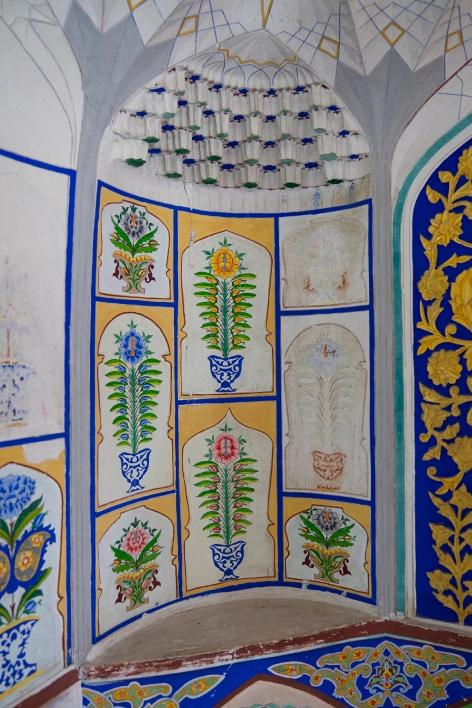
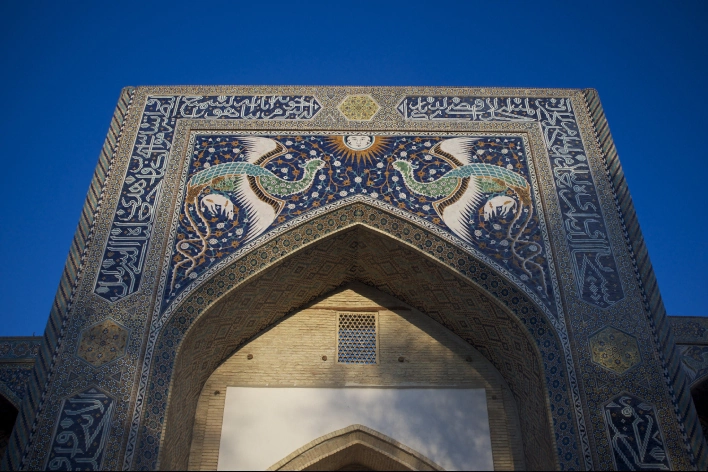
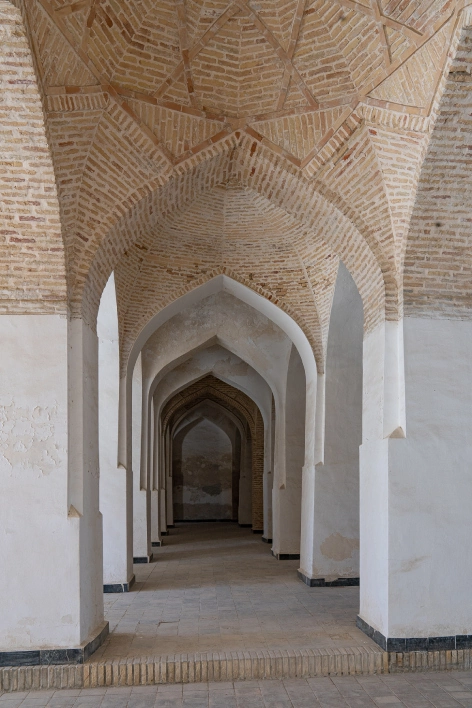
In Bukhara, the medieval core is preserved almost in full: madrasahs, mosques, caravanserais, trading domes, and old quarters form a living urban fabric. You do not have to “hunt” for history—history surrounds you. Walk out to Lyabi-Hauz or to the Poi-Kalyan Complex to understand why Bukhara is so valued by travelers.
Classic Uzbekistan tours almost always include Bukhara alongside Tashkent, Samarkand, and Khiva. For many guests, Bukhara becomes the most “home-like” city of the route: an intimate old town, teahouses by Lyabi-Hauz, evening lights, and an unhurried pace.
Estimated reading time: ~6–7 minutes.
Last updated: December 2025
Where is Bukhara and how do you get there?
Bukhara is one of Uzbekistan’s key cities and a core destination of historic Central Asia. Bukhara is one of the best-preserved medieval cities in Central Asia. The city lies west of Samarkand in an oasis region shaped by ancient caravan routes. For centuries, Bukhara was a major religious and trading center, and its historic center has been on the UNESCO World Heritage List since 1993.
- From Tashkent: high-speed and regular trains connect Tashkent and Bukhara via Samarkand or directly, depending on the route.
- From Samarkand: direct trains (including fast services) reach Bukhara in roughly 1.5–2.5 hours.
- From Khiva and Nukus: usually as part of a longer Uzbekistan itinerary, with connections through key hubs.
Current train schedules and the option to buy train tickets online are available on our railway tickets page.
This page serves as a complete travel hub for Bukhara.
Quick answers
Where is Bukhara?
In western Uzbekistan, west of Samarkand, in the Bukhara oasis.
What is the easiest way to arrive?
For most travelers: by train from Tashkent or Samarkand.
Tickets and schedules: caj.uz/en/railway.
How many days are needed?
One day covers the essentials, but 2 days is ideal for adding out-of-town sites and a calmer pace.
Bukhara Airport – fly or take the train?
Bukhara has an international airport that, depending on season and schedules, serves domestic and some international flights. However, most travelers prefer trains and combine Bukhara with Tashkent, Samarkand, and Khiva in a single Uzbekistan itinerary.
Flying to Bukhara
- Domestic flights between Tashkent and Bukhara may operate (current schedules must be checked).
- International arrivals often route via Tashkent, followed by a train/car transfer to Bukhara.
If time is extremely limited, a flight can be convenient, but for a complete Uzbekistan route, trains often create smoother city-to-city logistics.
Trains and combined routes
- High-speed and regular trains connect Bukhara with Tashkent, Samarkand, and other cities.
- A common model: fly into Tashkent → train to Samarkand → Bukhara → Khiva.
Train schedules in Uzbekistan and the option to buy tickets online are available on “Railway tickets” at caj.uz.
Quick answers
Does Bukhara have an airport?
Yes, Bukhara has an international airport serving domestic and some international flights.
Train or plane—what is better?
For multi-city Uzbekistan travel, usually train. A plane helps when time is tight or connections are complex.
Where to check train schedules?
Current services and tickets: caj.uz/en/railway.
Why Bukhara is one of the best cities for an “Eastern walk”
A living old city
In Bukhara, the historic center does not feel like a “museum behind glass.” Madrasahs, caravanserais, and trading domes are still part of everyday life—craftsmen, shops, teahouses. This creates comfort and a sense of a real East.
Warm rhythm and intimacy
Many travelers call Bukhara the most “home-like” city on the Uzbekistan route: compact squares, evening lights over Lyabi-Hauz, calm walks through old streets. It is easy to slow down here and simply stay in the atmosphere.
A classic silhouette for photos
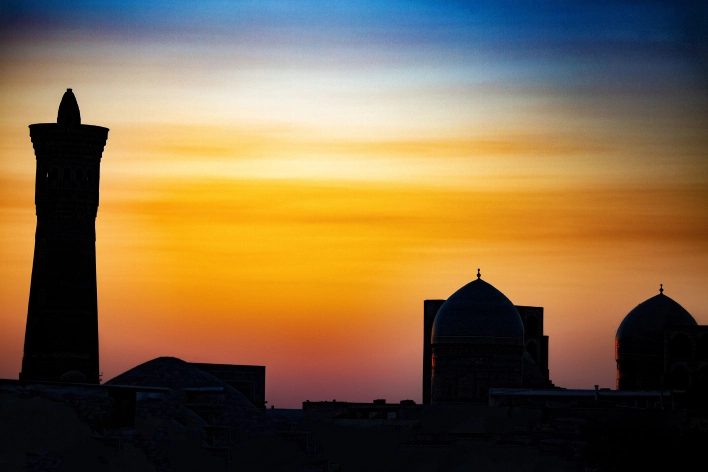
The Kalyan Minaret, Ark Citadel, domes, Lyabi-Hauz, Chor Minor—Bukhara’s skyline is instantly recognizable. It is ideal for travelers who want not only “checkmarks,” but strong photos and lasting impressions.
Is Bukhara suitable for slow travel?
Yes — compact distances, walkability, and calm evenings make it ideal.
Travel style note
Bukhara works equally well for short cultural stops and slow, in-depth stays.
Bukhara – short questions and quick answers
Bukhara or Samarkand – which is better?
They complement each other. Samarkand is more monumental and “postcard-like,” while Bukhara is intimate, warm, and lived-in. The best solution is to include both in one itinerary and distribute time between them.
How many days in Bukhara?
1 day is the minimum for the Old City. 2 days is the comfortable option: you can add out-of-town sites (Naqshbandi, Sitorai Mokhi-Khosa, Chor-Bakr) without rushing.
Is Bukhara safe for tourists?
The tourist center of Bukhara is considered a safe destination. Follow standard precautions: do not leave belongings unattended, use official taxis or pre-booked transfers, and keep documents and cash secure.
Can you explore Bukhara on foot?
Yes. The Old City is compact: Lyabi-Hauz, Poi-Kalyan, Ark, trading domes, and Chor Minor combine into an easy walking route. For out-of-town visits, it is better to use a car or an excursion.
How to get from Tashkent to Bukhara by train?
High-speed and regular trains run between Tashkent and Bukhara, either directly or via Samarkand. Current schedules and online ticket purchase: caj.uz/en/railway.
When is the best time to visit Bukhara?
The best seasons are April–May and September–October. Summer days are hot, but evenings are comfortable for walking; winter has fewer tourists and a special Old City atmosphere.
Do you need a guide in Bukhara?
You can see the Old City independently, but a guided tour in Bukhara connects sites into one story, adds context and legends, and saves time on route planning—especially if you have only 1 day.
What to see in Bukhara – top attractions
The heart of the Old City and the Poi-Kalyan ensemble
Poi-Kalyan Complex
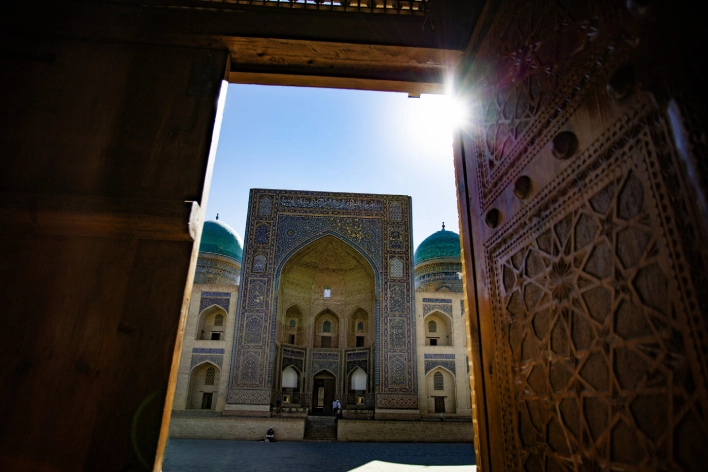
The main architectural symbol of Bukhara is the Poi-Kalyan ensemble: the Kalyan Minaret, Kalyan Mosque, and the Miri-Arab Madrasah. By day you can study details of brickwork and ornament; in the evening you feel the scale and quiet power of the place.
Details →Ark Citadel
The Ark is an ancient citadel that held palace spaces and the residence of the Bukharan emirs. From its walls you can see the city, and inside you find exhibitions about governance and daily life in Bukhara.
Lyabi-Hauz and the trading domes
Lyabi-Hauz Ensemble
One of the most atmospheric corners of the city: the Lyabi-Hauz pond surrounded by mature trees, madrasahs, and a khanaka. It is perfect for an evening pause in a teahouse, watching local life. This is also a convenient starting point for a Bukhara walking route to the trading domes.
Trading domes and Chor Minor
Historic trading domes (Toqi Zargaron, Toqi Telpak-Furushon, Tim Abdulla Khan) still live by crafts and souvenirs. Nearby is Chor Minor—a small but very photogenic structure with four towers, one of Bukhara’s most recognizable symbols.
The oldest monuments and sacred places
Samanid Mausoleum
The Mausoleum of Ismail Samani is a unique masterpiece of early Islamic architecture, built of fired brick with a complex masonry pattern. Against the later glazed monuments, it feels minimal, deep, and timeless.
Chashma-Ayub and Bolo-Hauz
Chashma-Ayub (“Job’s Spring”) is known for its revered spring and unusual architecture. Bolo-Hauz is a mosque with carved wooden columns reflected in the pond. Both fit naturally with a visit to the Ark and the Samanid Mausoleum.
Bukhara outskirts (day trips)
Bahauddin Naqshbandi Complex
A key Sufi center and pilgrimage site of the region. The Naqshbandi complex lies outside the city and is known for an atmosphere of quiet and inner focus. It is often combined with other out-of-town sites in a 2-day Bukhara itinerary.
Sitorai Mokhi-Khosa & Chor-Bakr
Sitorai Mokhi-Khosa is the emir’s summer palace, blending European and Eastern elements. Chor-Bakr, the “City of the Dead,” is a calm necropolis with distinctive architecture and a special atmosphere.
Bukhara itineraries for 1–2 days
Bukhara in 1 day
Morning: Samanid Mausoleum, Chashma-Ayub, then the Ark and Bolo-Hauz. Midday: Poi-Kalyan Complex (minaret, mosque, madrasah) and nearby lanes. Evening: trading domes, Lyabi-Hauz, a teahouse by the water, and an Old City walk.
Best for travelers with limited time who want to cover the essentials with a reasonable pace.
1-day guided tourBukhara in 2 days
Day 1: Old City (Samanid Mausoleum, Chashma-Ayub, Ark, Bolo-Hauz, Poi-Kalyan, Lyabi-Hauz, trading domes, Chor Minor). Day 2: out-of-town sites: Naqshbandi complex, Sitorai Mokhi-Khosa palace, and Chor-Bakr, returning to the city in the afternoon.
This rhythm is ideal for most guests: you see what matters, and still have time to simply walk, pause, and feel Bukhara.
2-day routeBukhara map and the structure of the Old City
It helps to see the Old City as several zones: “Ark – Samanid Mausoleum – Chashma-Ayub”, “Poi-Kalyan”, and “Lyabi-Hauz – trading domes”. This makes planning a walking route in Bukhara simpler and avoids unnecessary backtracking.
Most key landmarks in the Old City are within walking distance of each other.
Most major sights in the Old City are within a 5–15 minute walk of each other.
If you divide the day into “morning / midday / evening,” you can assign each block to one cluster. You will see Bukhara in different moods without exhausting yourself with chaotic moves.
Open Bukhara on Google MapsPractical tips for Bukhara
Best season
The best months are April–May and September–October. Summer is hot in the daytime, so shift active walking to morning and evening and keep midday more flexible.
Money
The main expenses are food, entrance tickets, and optional tours. Keep some cash for bazaars, taxis, and small cafés, even if hotels and restaurants accept cards.
Pace
Do not try to fit all of Uzbekistan into 3–4 days. If possible, give Bukhara at least 1–2 calm days—this city opens deeper at an unhurried rhythm.
Budget for a trip to Bukhara
Daily spending in Bukhara varies by travel style. Below are typical cost blocks (excluding international flights).
Transport
- City taxis and apps are usually affordable for short rides.
- Transfers from/to the station or airport save time and energy.
- Trains are best booked early in high season via caj.uz/en/railway.
Food
- Teahouses and local cafés are the most budget-friendly.
- Restaurants around Lyabi-Hauz cost more but include atmosphere and views.
- Coffee and desserts are often cheaper than in major European cities.
Tours and tickets
- Entrance tickets for main sites are usually moderately priced.
- Bukhara guided tour pricing depends on private vs group format.
- In tour packages, these costs are typically included in the total price.
Where to stay in Bukhara
In Bukhara, location often matters more than “stars,” because it directly shapes the comfort of your walks and the overall feel of the trip.
Many visitors choose to stay inside the Old City to minimize daily transport and maximize walkability.
Lyabi-Hauz area
Maximum Old City atmosphere: everything is close, evenings are lively around the pond, and it is easy to return to the hotel on foot.
Near Poi-Kalyan
Quieter than Lyabi-Hauz, but close to Bukhara’s key ensemble. Good for early-morning and late-evening walks with fewer visitors.
Modern neighborhoods
A balanced choice for business travel with Old City visits. You may need short rides to the center, but infrastructure can be more modern.
What to taste in Bukhara
Bukhara-style plov
Each region of Uzbekistan has its own plov, and Bukhara plov should be on your list. It is often served with fresh salads, bread, and green tea—enough to fuel long walks through the Old City.
Shashlik, manti, soups
For meat lovers, Bukhara is very comfortable: shashlik, manti, shurpa, lagman and other dishes are easy to find almost everywhere.
Tea and Eastern sweets
Tea is essential to the Bukhara rhythm. It pairs well with dried fruits, nuts, halva, and light sweets. Around Lyabi-Hauz you can choose between traditional teahouses and modern cafés.
How to get to Bukhara
Bukhara is usually visited as part of a broader Uzbekistan itinerary, so transfer logic matters as much as sightseeing.
From Tashkent
High-speed and regular trains operate between Tashkent and Bukhara, either directly or via Samarkand. Choose a specific train based on arrival/departure times to avoid long waits. Current schedules and tickets: caj.uz/en/railway.
From Samarkand
The Samarkand–Bukhara leg often takes about 1.5–2.5 hours. It works for both a day visit and a stay overnight in Bukhara. Tickets are available online: Railway tickets.
Continuing to Khiva / Aral region
For western routes (Khiva, Karakalpakstan, Aral Sea region), trains and private vehicles are commonly used. When building programs, we align segments with schedules for maximum comfort between Bukhara and the next points.
Transfers in Bukhara
A transfer is essentially “a taxi with a pre-agreed price”. For many travelers, this is easier than searching for transport after arrival.
From the airport
The driver meets you at the airport, helps with luggage, and takes you directly to your hotel or apartment in Bukhara.
This is especially helpful for late-night or very early flights when you have less energy to negotiate transport.
Transfers →From the railway station
Same logic for train arrival: step off the carriage and already know who meets you, where you go, and how much it costs.
Typical ride time Station ↔ Old City is around 15–20 minutes.
Book →Railway tickets
For routes between Tashkent, Samarkand, Bukhara, and Khiva, trains are the most practical choice. Current schedules and online ticket purchase: caj.uz/en/railway.
Nature near Bukhara: reserves and Tudakul Lake (birdwatching)
Bukhara is not only architecture and history. For travelers who want a change of rhythm—or for a birdwatching near Bukhara day— the region has natural zones that can be added to a 2-day Bukhara itinerary or as a separate morning/afternoon trip. A useful overview of protected areas and nature routes is available here: caj.uz/en/zapovedniki.
Tudakul Lake: a calm escape for birdwatchers
Tudakul Lake is one of the most popular nature add-ons in the Bukhara area for travelers who enjoy open landscapes, quiet observation, and birdwatching. It fits well after intense Old City walking: fewer crowds, more silence, and a different “inner balance” for the trip—especially for photographers and nature-focused guests.
Protected areas and eco tourism in Uzbekistan
If your route includes more nature experiences, consider building a program that combines Bukhara culture with eco tourism in Uzbekistan—reserves, steppe landscapes, and seasonal nature observation. The key point is planning: timing, transport, and comfort should match your main itinerary (1–2 day city focus or a longer route).
From Bukhara to Turkmenistan: Alat–Farap border crossing (logistics)
Bukhara can also serve as a gateway to Turkmenistan. A common overland route goes via the Alat–Farap border. Practical border notes and country crossing guidance are available here: caj.uz/en/borders.
Distance: from Bukhara to the Alat–Farap crossing is 97.6 km.
Neutral zone: between the border points there is a neutral zone that must be crossed on foot with luggage, approximately 2.5 km, before continuing the journey.
After the crossing, it is possible to continue toward Turkmenabad, and further to Mary and Old Merv, depending on the travel plan and border procedures.
Bazaars and shopping in Bukhara
Bukhara is ideal for travelers who want to bring home not only photos, but also items with a story and a craftsman’s work behind them.
Souvenirs
- Suzani embroidery and textiles
- Ceramics and clay tableware
- Handmade carpets
- Jewelry
- Spices, dried fruits, nuts
Bargaining
A key element of an Eastern market is friendly bargaining. A smile, respectful tone, and understanding that price is a dialogue often bring a good result for both sides.
Where to buy
The best area is the trading domes and their surroundings: many shops and workshops are concentrated here, with choices for every budget.
Traveler advice
Language
In the tourist areas of Bukhara, basic communication is usually manageable; guides and staff in tourism often use English to support visitors.
Photography
Respect personal space: before taking close-up portraits—especially in mosques and at mausoleums—it is better to ask permission.
Planning
If time is limited, define priorities in advance: “must-see points” vs a calmer, atmosphere-first format. This makes it easier to choose between one day and two days in Bukhara.
Many travelers explore Bukhara independently and later choose a guided tour for deeper historical context.
Tours and excursions in Bukhara
A private or group Bukhara tour helps you use time efficiently and avoid distractions with logistics— especially when Bukhara is combined with other cities in Uzbekistan.
2-day tour to Bukhara from Tashkent
A structured option for travelers who want an efficient city break: Bukhara Old City highlights in a logical order plus comfortable logistics.
View tour →Guaranteed Uzbekistan Tour
A ready-made Uzbekistan program with a defined schedule—useful for travelers who want clear dates and a fixed route that includes key cities.
View tour →Aral Sea tour (add-on for the full Uzbekistan route)
For travelers building a deeper itinerary beyond Bukhara, the Aral Sea region offers a dramatic landscape and an important ecological story. This can be integrated into a longer route with Karakalpakstan and western Uzbekistan.
View Aral Sea tour →Explore more Uzbekistan itineraries including Bukhara here: caj.uz/en/tours.
Reviews about Bukhara
Elena & Sergey, Russia
Route: Tashkent – Samarkand – Bukhara – Khiva
“In Bukhara we loved most that the Old City is alive—real teahouses, craftsmen, people inside madrasahs. Lyabi-Hauz in the evening is special: you can just sit and watch life flow. Out of all cities, Bukhara felt the coziest.”
Andrey, Kazakhstan
Short Uzbekistan trip
“We had only 1.5 days, but with a well-built tour we saw everything we planned. Ark, the Samanid Mausoleum, and evening Poi-Kalyan were unforgettable. We want to return to Bukhara at a slower pace.”
Why choose CAJ for Bukhara and Uzbekistan travel
This Bukhara travel guide was prepared by the CAJ (caj.uz) team based on long-term practical experience with private travelers and groups. The company has worked in tourism since 1996, organizing programs across Bukhara, Samarkand, Tashkent, Khiva, the Fergana Valley, and the Aral region.
Routes, time estimates, site order, and city combinations described here have been tested many times in real operations. That means the page is built on structured, field-verified Uzbekistan travel experience.
Content prepared by local travel experts working in Uzbekistan since 1996.
Specialization: Uzbekistan & Central Asia tours
In tourism: since 1996
Suggested routes that include Bukhara
Ready-made tours including Bukhara
If you prefer a structured itinerary rather than self-planning, choose a format that includes Bukhara:
FAQ – frequently asked questions about Bukhara
What are the must-see places in Bukhara?
Top Bukhara attractions include: the Poi-Kalyan ensemble (Kalyan Minaret and Mosque, Miri-Arab Madrasah), Lyabi-Hauz, Ark Citadel, Samanid Mausoleum, Chashma-Ayub, Bolo-Hauz Mosque, trading domes and Chor Minor, plus out-of-town sites: Naqshbandi, Sitorai Mokhi-Khosa, and Chor-Bakr.
How many days are needed for Bukhara?
Minimum: one full day for the Old City. Optimal: two days to add day trips and keep a calm pace.
Is Bukhara safe for tourists?
Bukhara is generally considered a safe destination. Follow standard precautions: watch belongings, use official taxis or transfers, and respect local rules.
Is Bukhara suitable for travel with children?
Yes. With reasonable planning, weather awareness, and regular breaks, Bukhara works well for family travel. Children often enjoy the Ark Citadel, the Kalyan Minaret, bazaars, and train rides between cities.
How to combine Bukhara with other cities in Uzbekistan?
Bukhara is often combined with Tashkent, Samarkand, and Khiva. Travel between cities is convenient by train and car. In packaged tours, these segments are already planned and aligned with schedules.